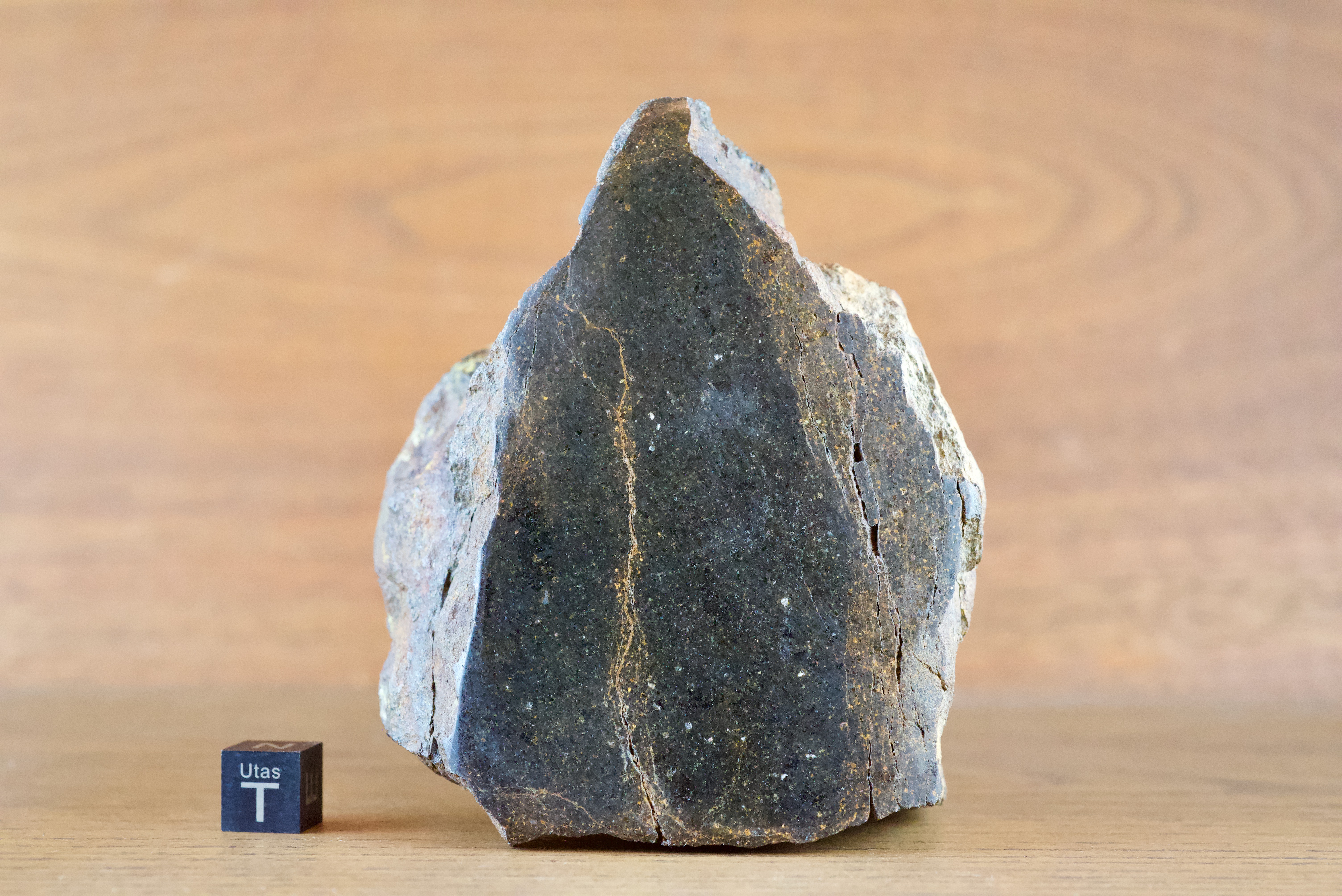
NWA 5363/5400, ungrouped achondrite
Because of its isotopic similarities with the Earth-Moon system, shortly after this meteorite was found, one researcher hypothesized that it might be a piece of proto-Earth or Theia (the planetesimal that hypothetically impacted the Earth ~4.5 billion years ago, leading to the formation of the Moon). That theory was quickly popularized by meteorite dealers and collectors.
Subsequent work has, as with most sensationalist claims made about new meteorite finds, conclusively ruled out those theories. I think it is currently safe to say that NWA 5363/5400 is either 1) an isotopically anomalous brachinite produced by late-stage melting on that parent body, or 2) it is from a parent body very similar to – but distinct from – brachinites.
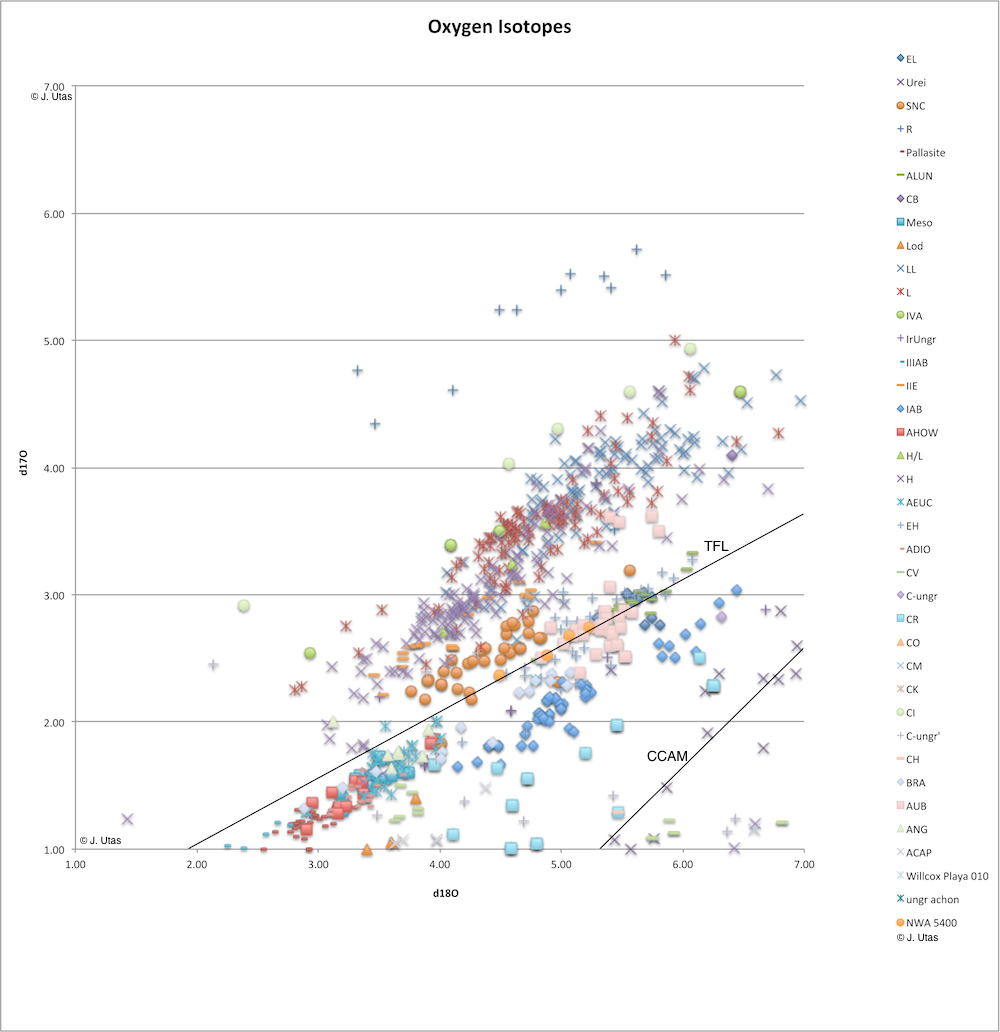
The Δ17O value of this meteorite is less than most other brachinites, but when the data is viewed as a whole, it plots as only a slight outlier. See below: NWA 5363/5400 oxygen isotope data are the slightly lighter orange circles (4) that plot along the terrestrial fractionation line (TFL) (see key). Note the light blue/grey diamonds (brachinites, see key) just below them, in a line that doesn’t quite parallel the TFL. Note the spread in the brachinite data. Then check out the spread in the other classes of meteorites. As you can see, many classes exhibit greater Δ17O spread (variation in distance from the TFL), and many classes have trends that don’t run parallel to the TFL. If the average of the symbols representing individual points is taken for NWA 5363/5400, this meteorite plots very near the edge of the brachinite field. Its bulk composition is essentially a brachinite.
2020 Update:
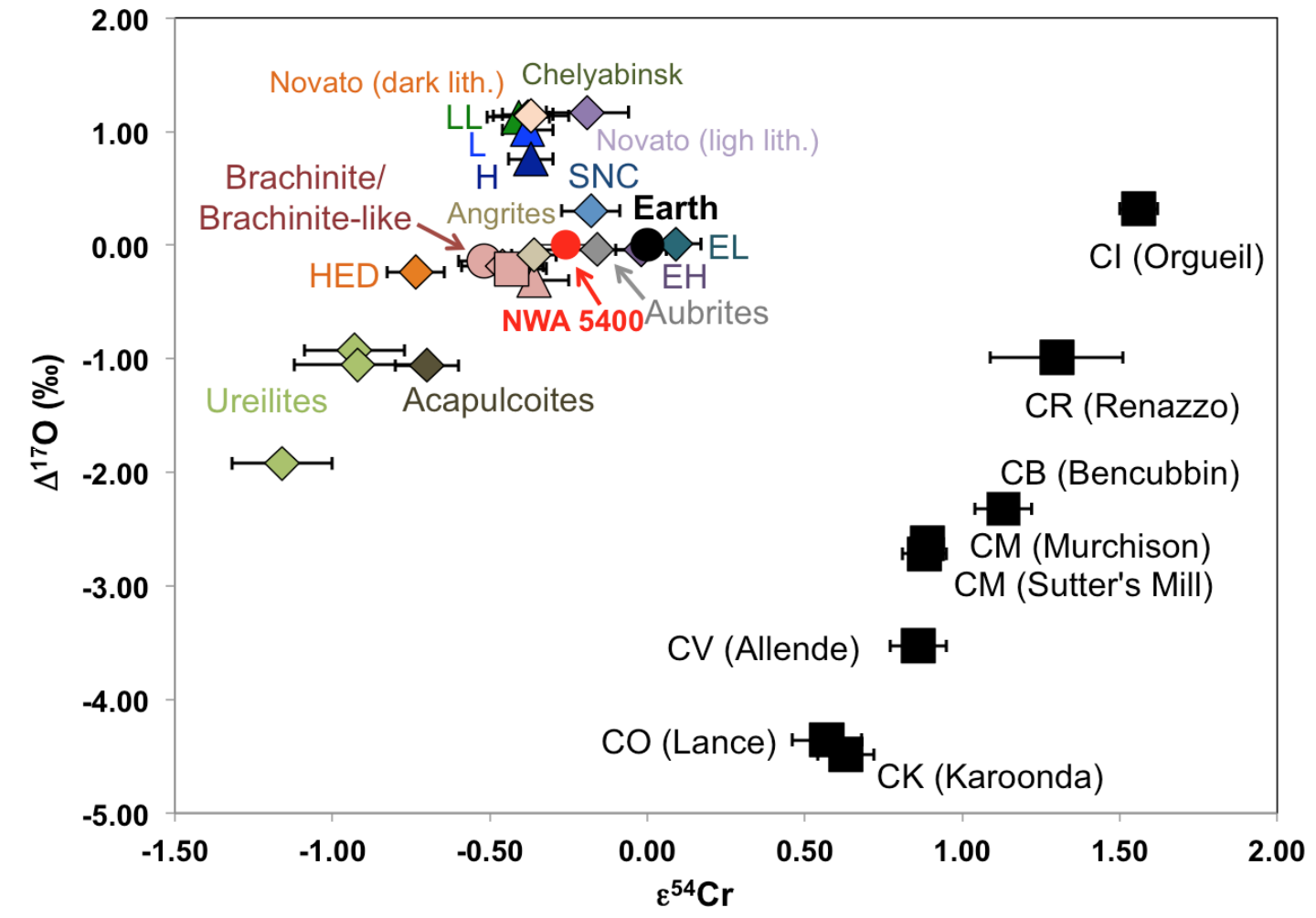
This is a little late, but much more work has since been done on this meteorite. Sanborn et al. (2016), published Cr-isotope data on NWA 5363 and pairings — that also confirm that this meteorite falls at the edge of the observed ΔCr range seen in typical brachinites. It looks like brachinites outline a trend in O-isotope space that isn’t quite parallel with the TFL. Or maybe, as Sanborn et al., propose, NWA 5363 and pairings are just from an asteroid very similar to other brachinites.

Regardless of what people eventually conclude, brachinites are some of the rarest meteorites around, and their similarities and differences compared to Earth make them interesting research subjects.
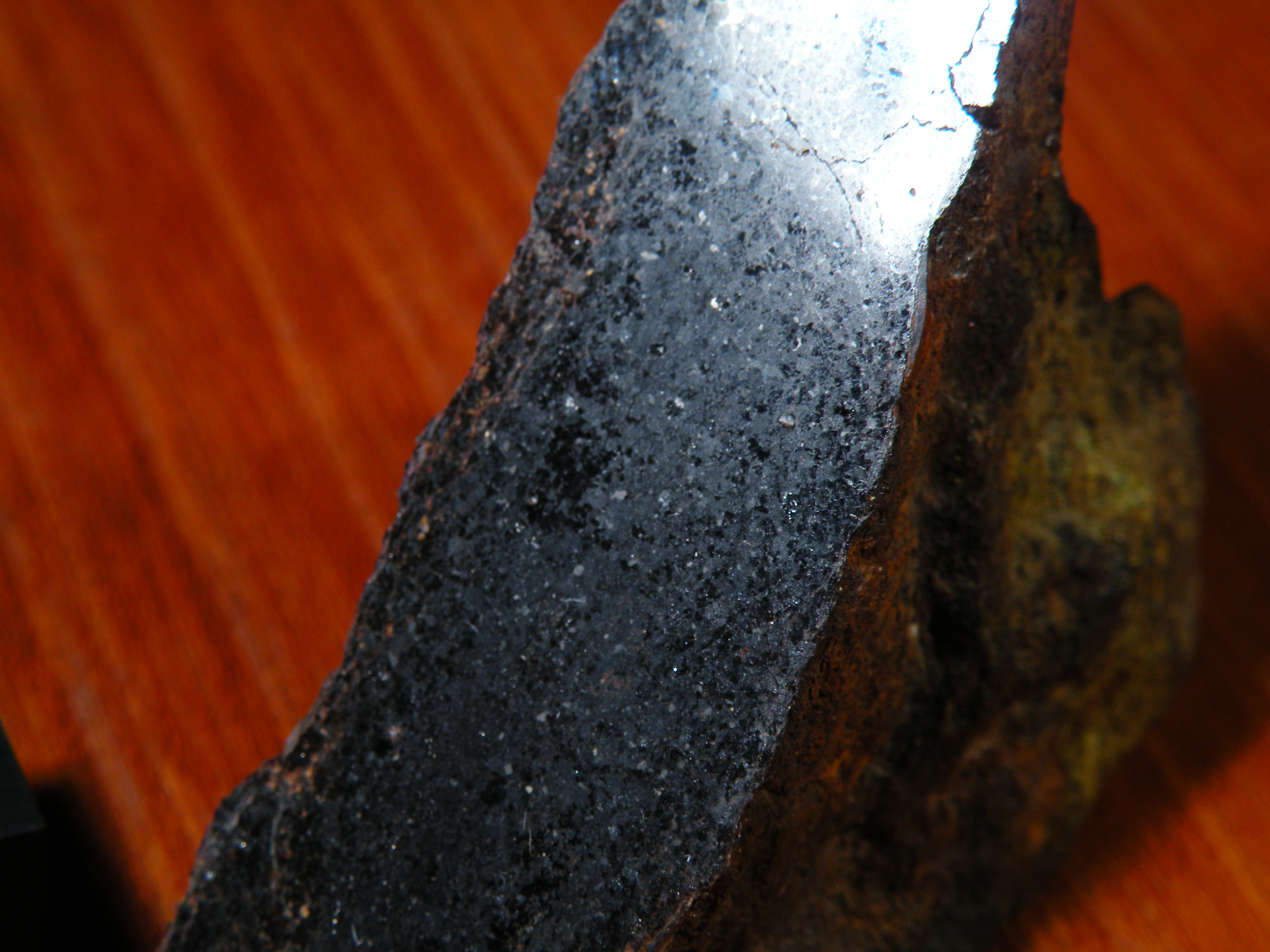
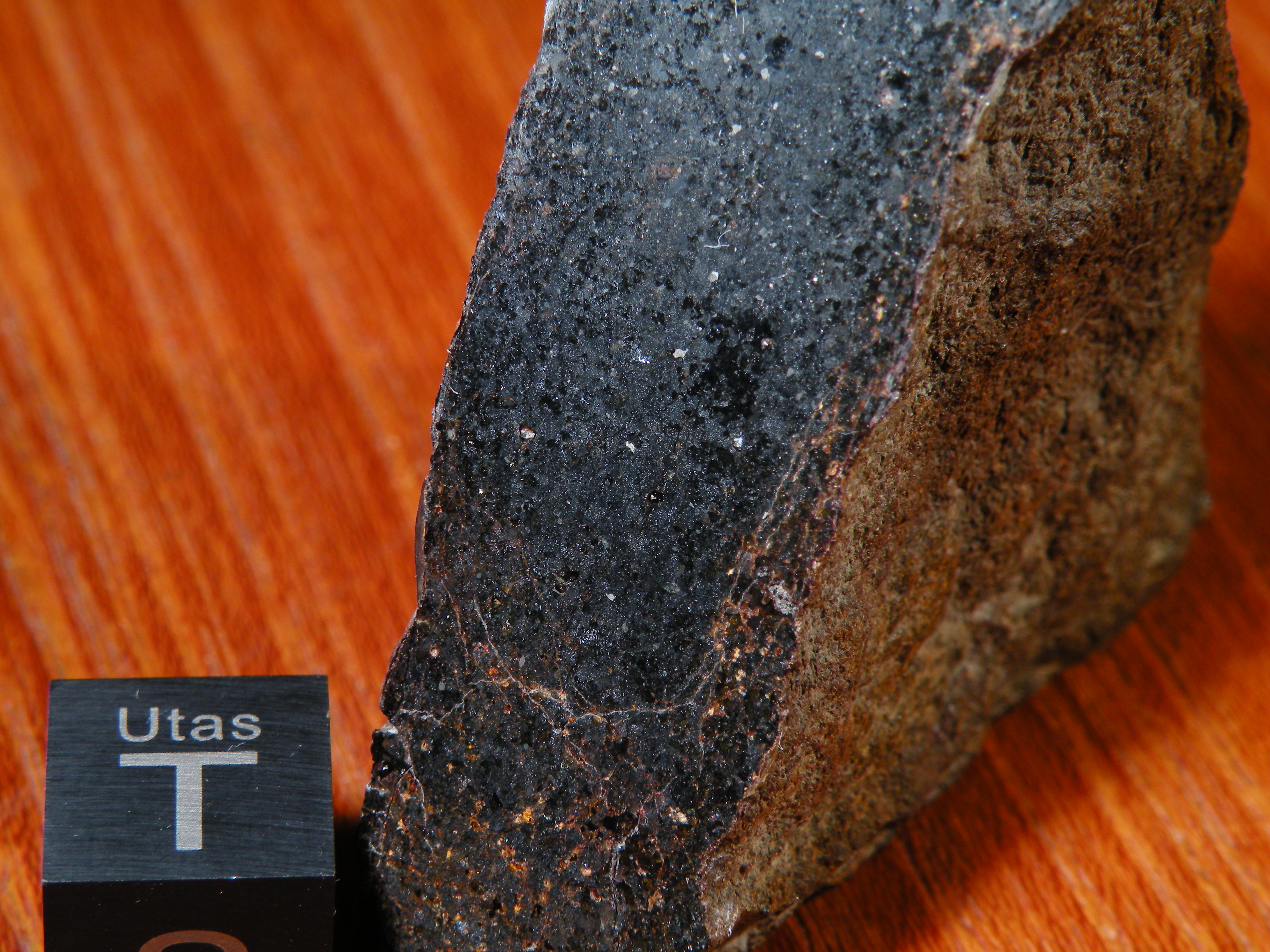
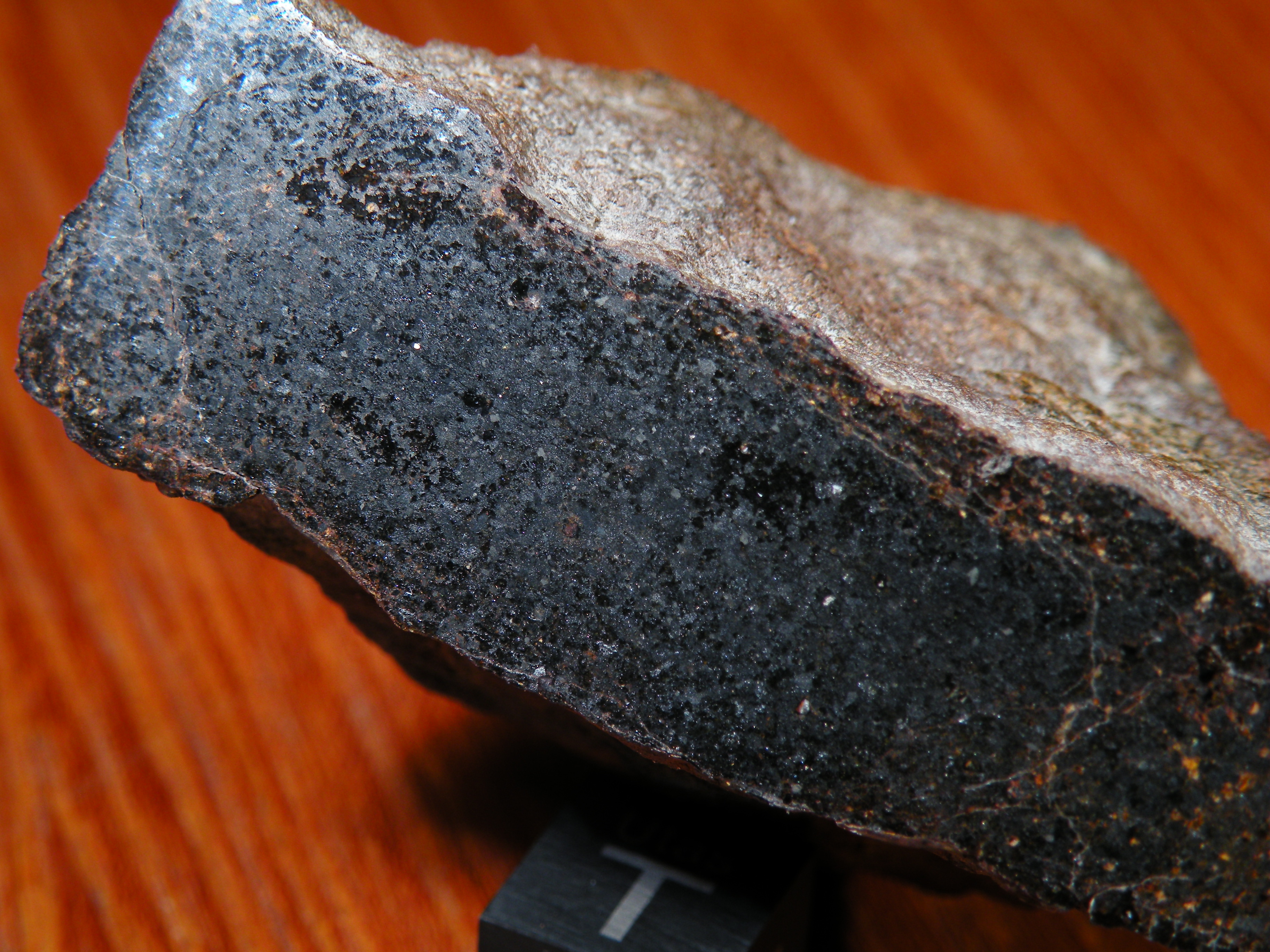
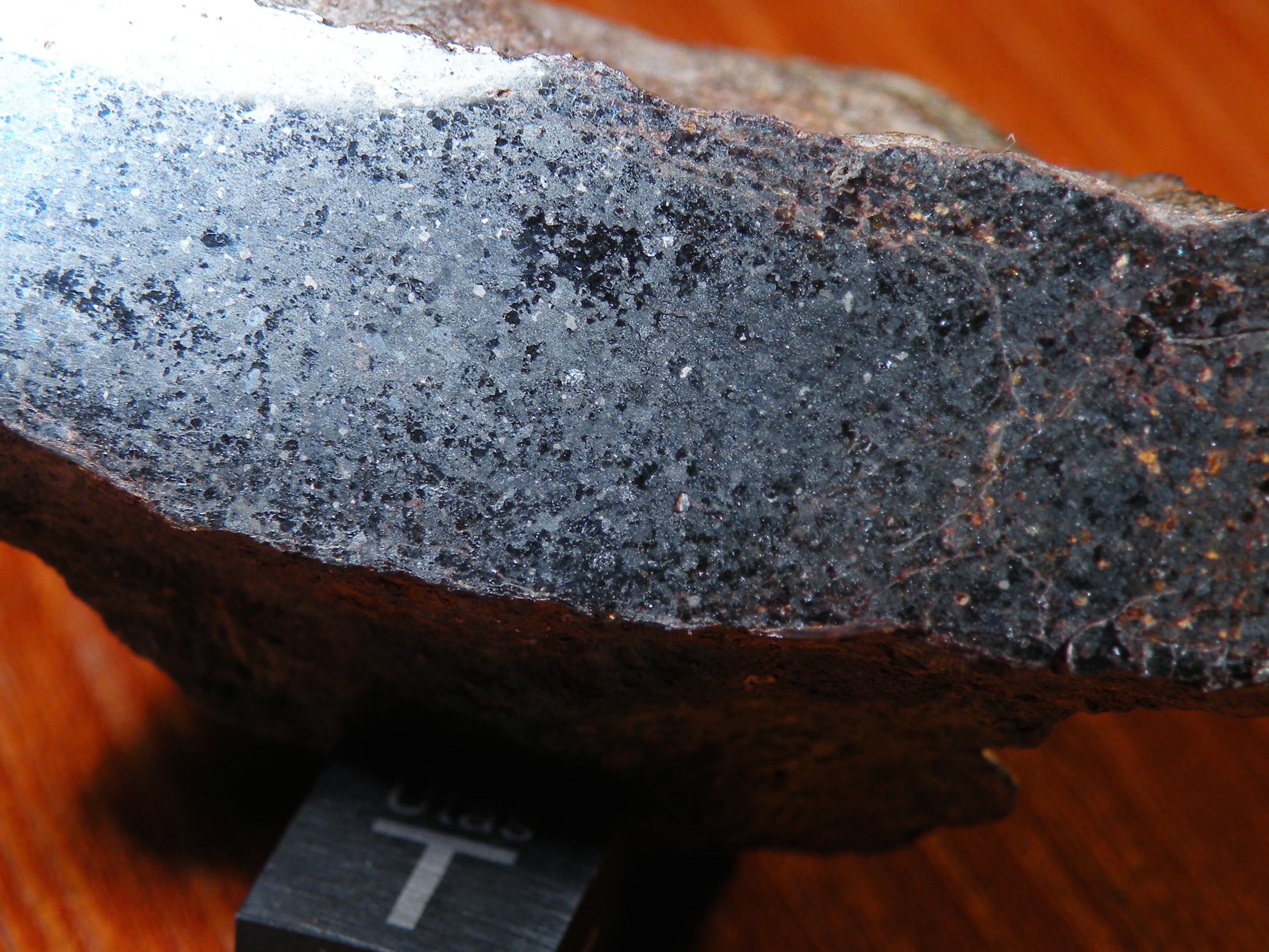
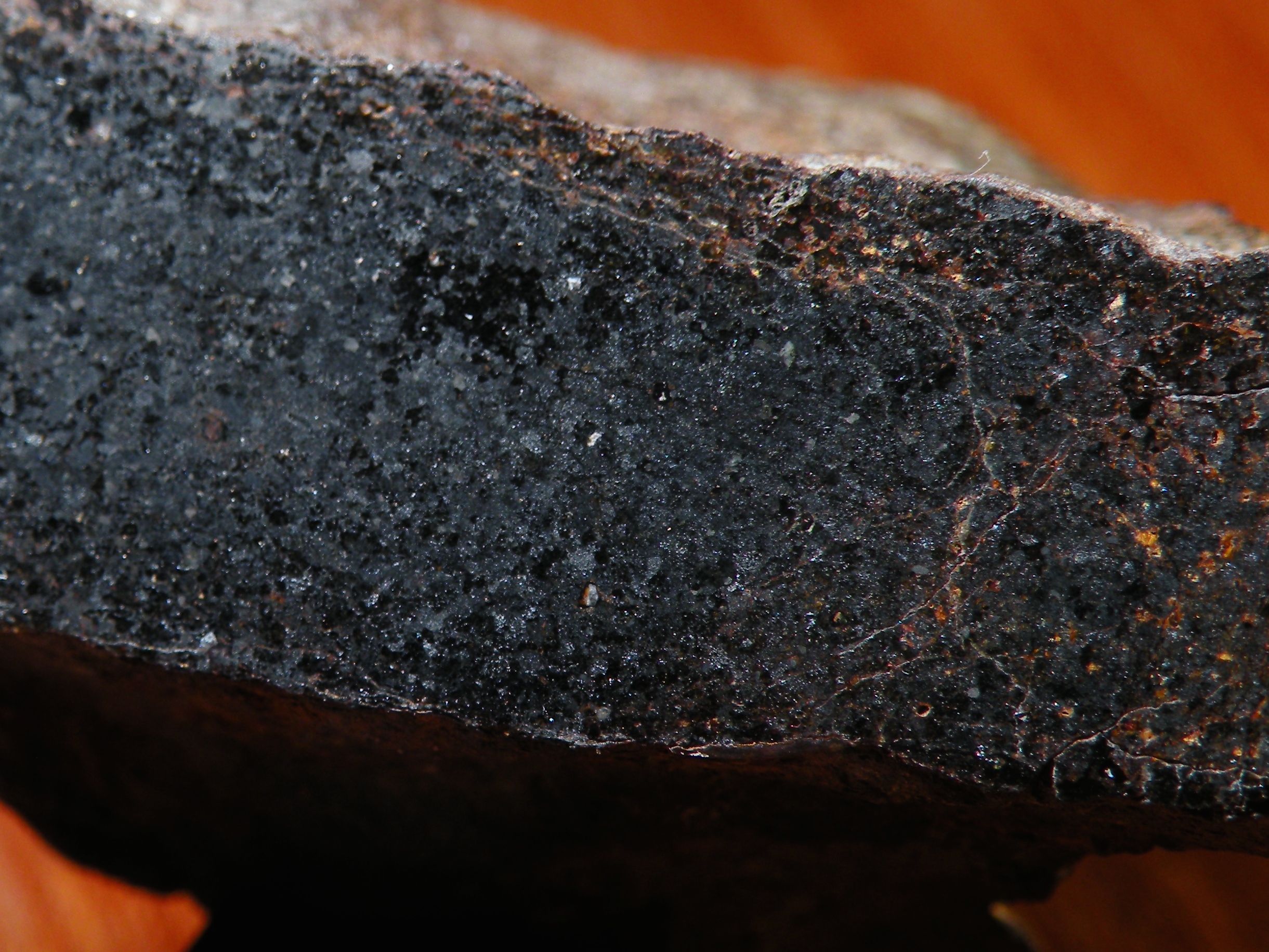
Here are some photos of a 66.7 gram windowed fragment. A larger specimen turned up later later; it is pictured below.
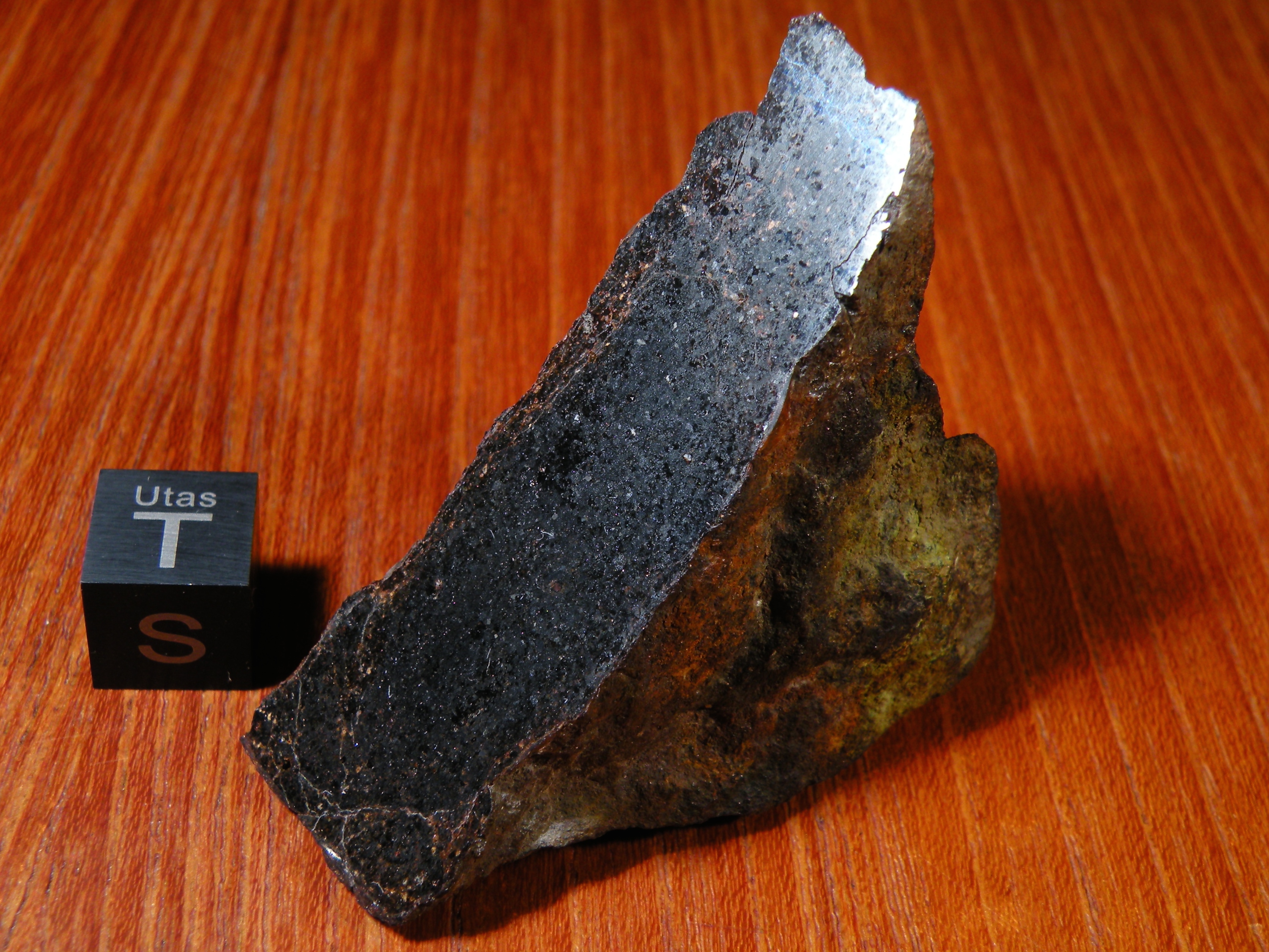
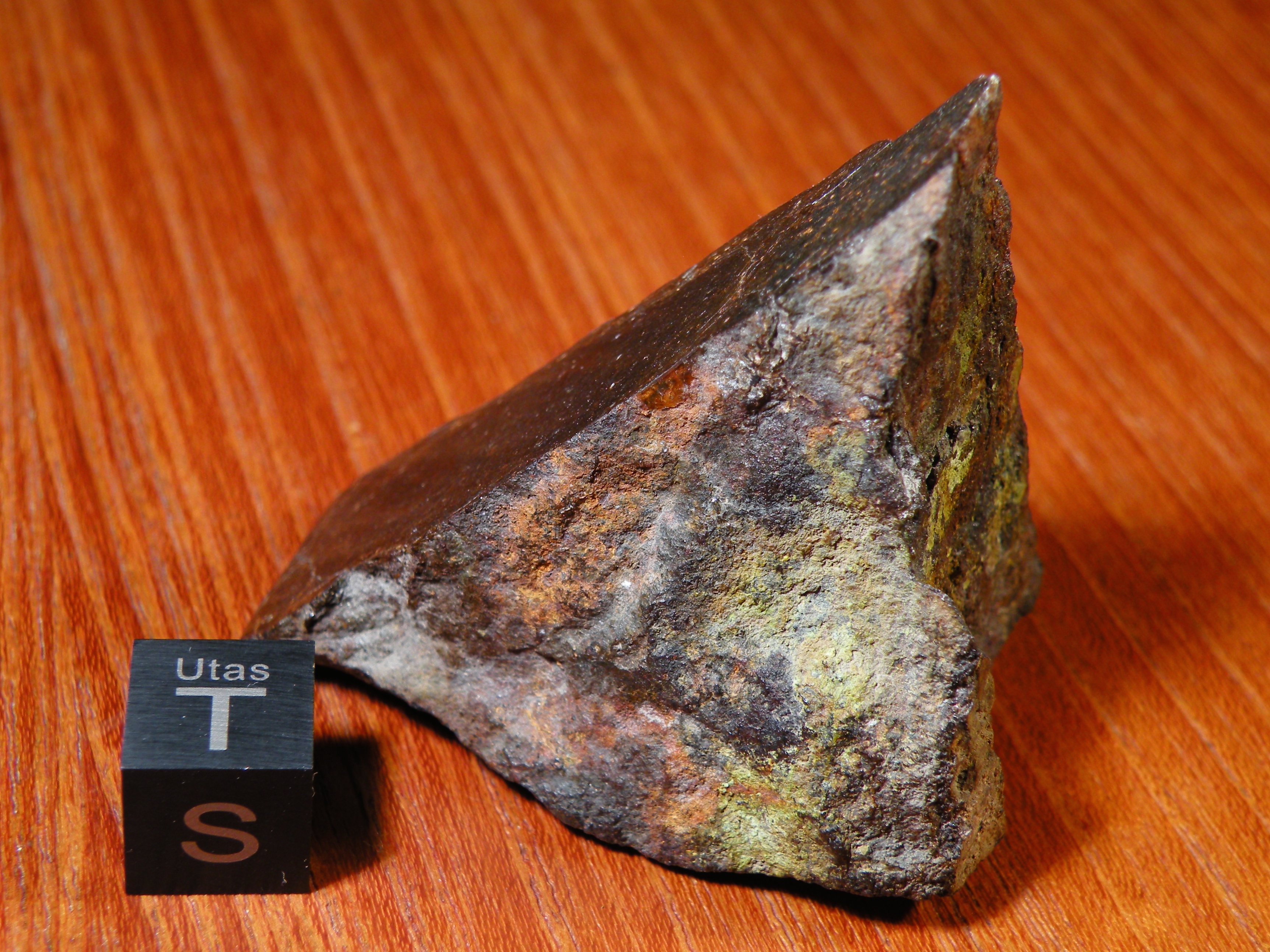
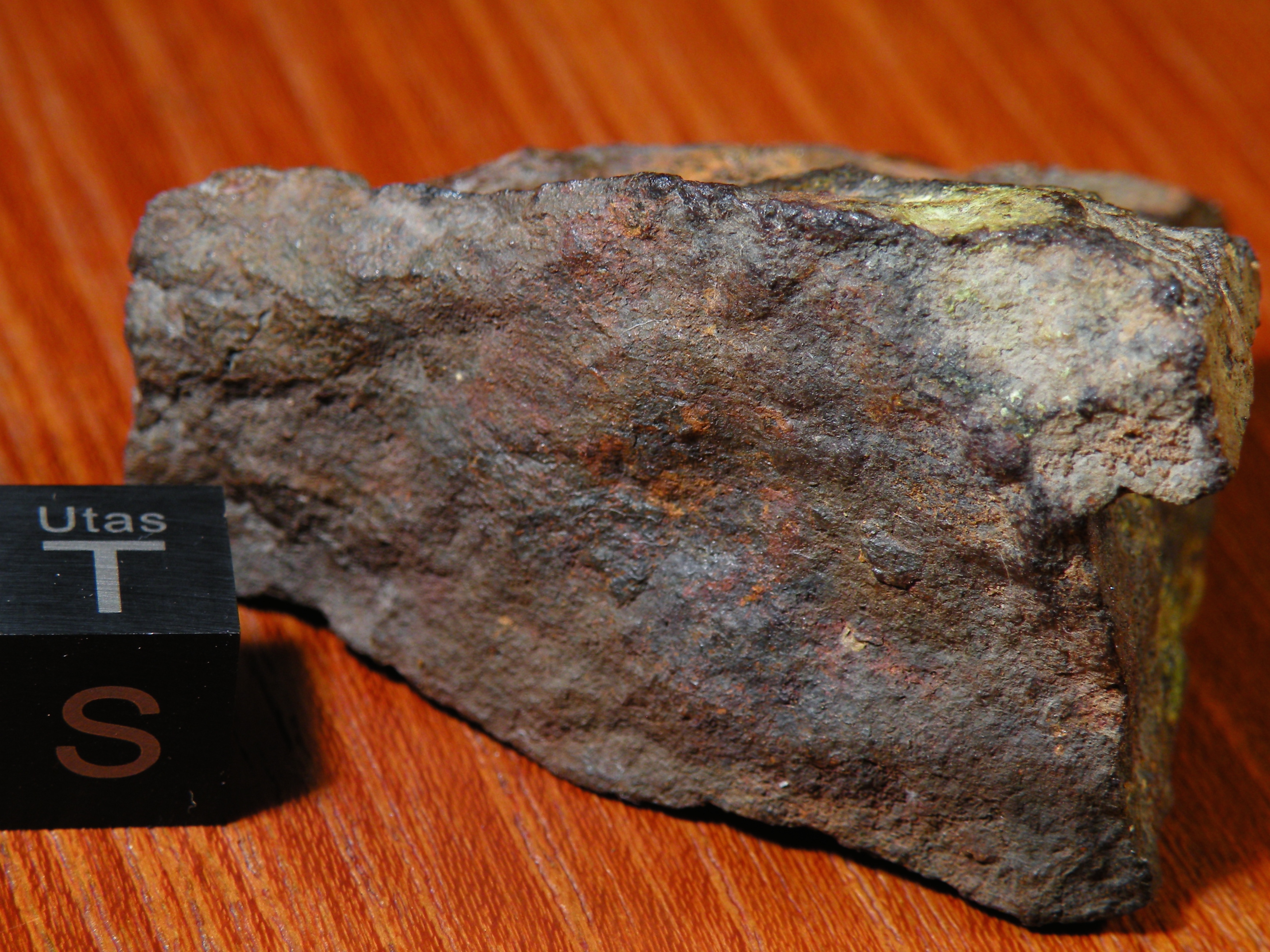
698.8 grams