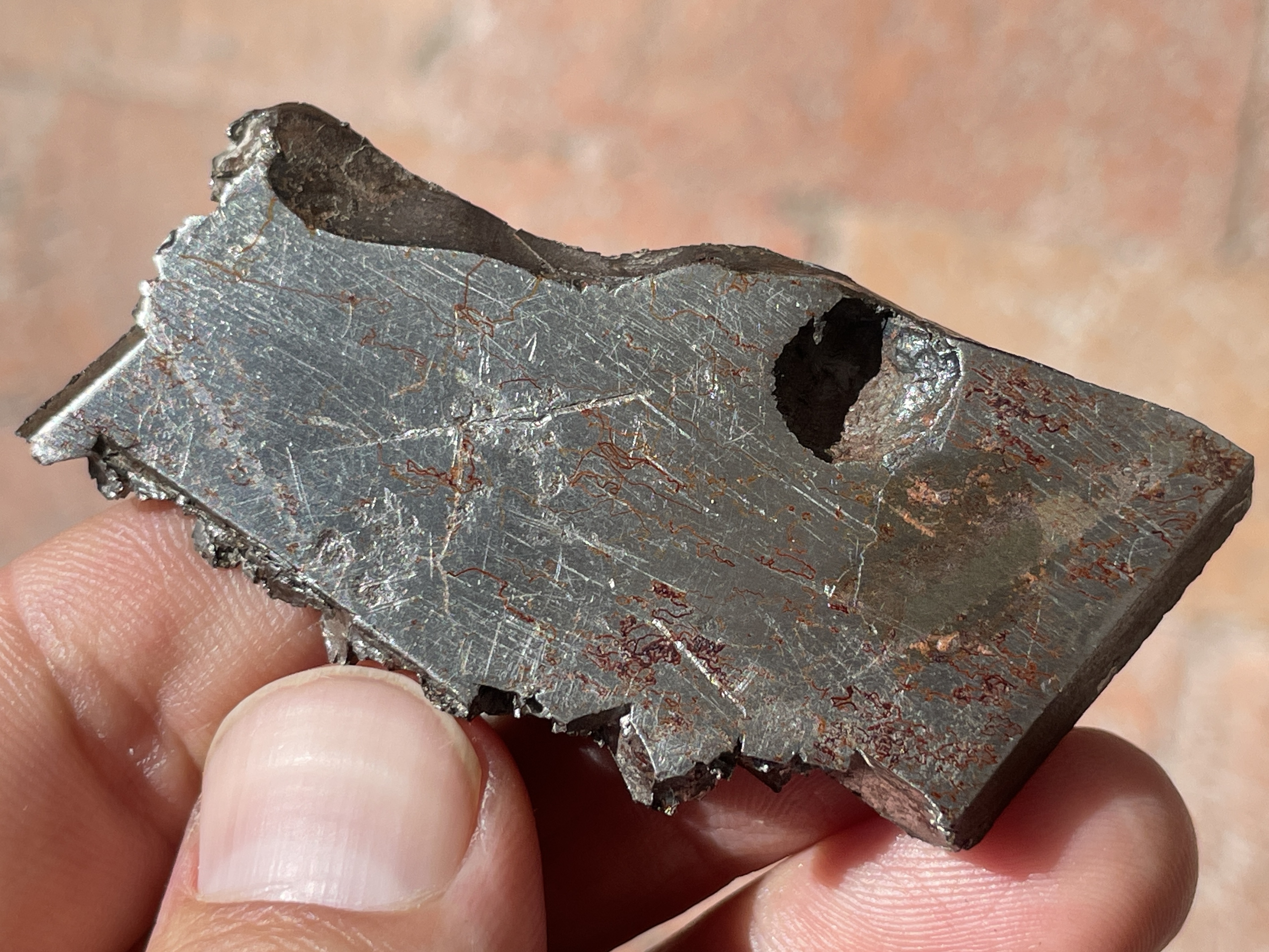
Braunau, IIAB
At about 3:45 AM on the morning of July 14, 1847, people in villages around Broumov were roused by a series of ground-shaking detonations. Early risers reported seeing a red ball of fire trailed by a large, dark smoke train in the pre-dawn sky.
Buchwald provided a short summary of its fall and recovery in his Handbook of Iron Meteorites:
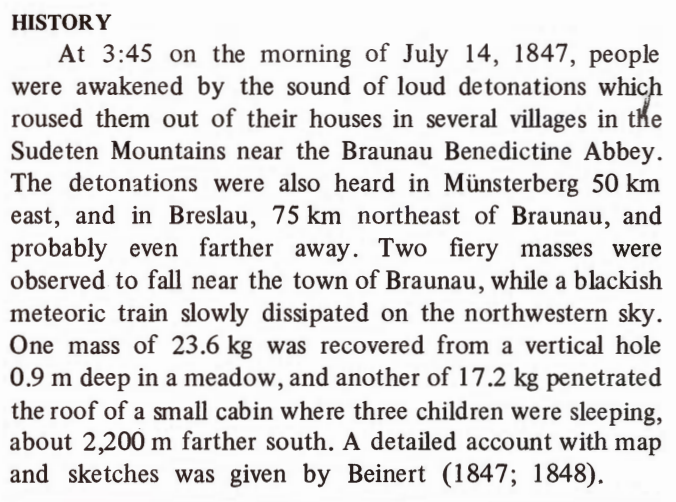
While researching this fall, I came across a remarkable resource: Der Meteorit von Braunau am 14. Juli 1847: actenmässige Darstellung, Beschreibung und Analyse, nebst Ansichten über die Natur der Meteoriten, by Carl Christian Beinert. Beinert conducted a detailed investigation of the meteorite fall, including eyewitness interviews and meticulous observations of the circumstances of the fall and recovery of each mass. He compiled all of the evidence in a ~50 page report. The following passages are excerpts translated from it:
The meteorite fall at Hauptmannsdorf and Ziegelschlag near the town of Braunau in Bohemia occurred under extremely rare and fortunate circumstances. Not only could the fiery phenomenon in the atmosphere, accompanied by an extraordinary brilliance of light, be observed by several eyewitnesses, but the fallen meteoric masses were also discovered immediately after their fall, that is, while they were still hot. Thus this event undoubtedly belongs among the most important and scientifically useful cases of this kind.
Although I myself was not fortunate enough to witness the splendid celestial phenomenon, my ears nevertheless heard the impressive announcement of the rare visitor. On the morning of 14 July 1847, 45 minutes after three o’clock, two violent thunderclaps in quick succession startled me from sleep.
Assuming that a strong thunderstorm must be approaching, I hurried to the window and was not a little astonished to see the horizon clear and cloudless in every direction, and in the east glowing with the most beautiful dawn-red.
While I was still uncertain whether I had been dreaming or not, verbal reports soon arrived from several directions describing the appearance of a fireball which had been seen moving across the sky like a fiery serpent with indescribably brilliant light, and which disappeared with two loud thunderclaps.
Account of Wenzel Kahler, laborer of Hauptmannsdorf
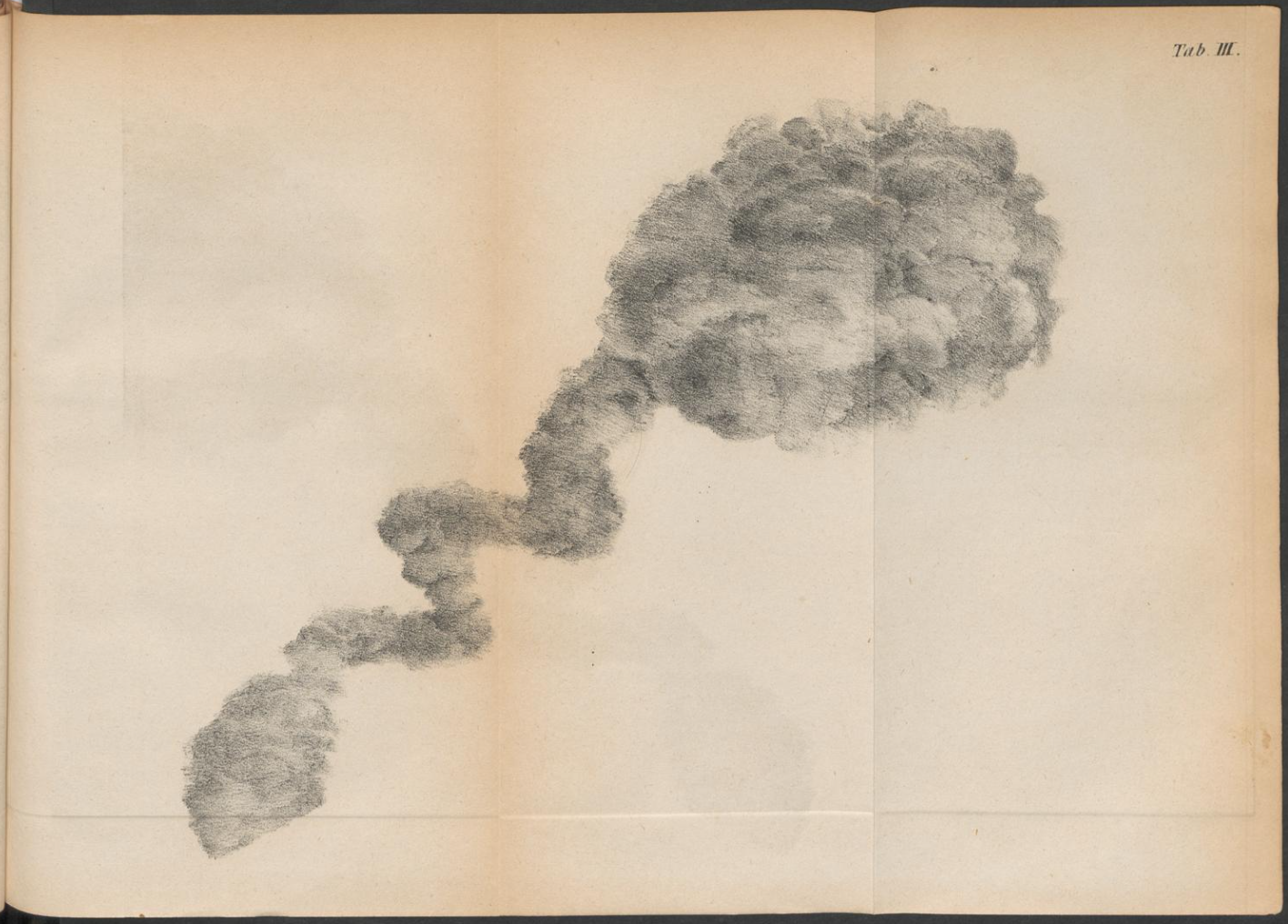
On the morning of 14 July, at about half past three, I went out to the fields. While walking there I suddenly saw in the north-western sky, which was completely clear and where several stars were still visible, a fiery meteor moving from West toward East. At first it resembled a round fiery cloud. Soon afterward it stretched out into a long luminous band that moved in a wavelike and zig-zag manner.
The color changed continually; sometimes it appeared reddish, then yellow, and at other moments silvery white. For a short time the phenomenon appeared to stand still in the sky.
Those who were standing to the northwest remained rooted to the spot with fright, while I myself, who was walking westward, turned around again, fearing that the meteor might fall upon me.
After some time it moved forward again.
The fiery streak then formed two luminous spheres, each about the size of a five-pound cannonball. Immediately afterward there occurred two loud detonations like heavy artillery, followed by a long rumbling and rushing sound. At that moment a yellowish streak shot downward toward the earth above Hauptmannsdorf, while another whitish streak flew away in a curved line toward the South.
Account of Karl Marisch
I had gone out to the hillside to gather dry wood. As I walked along the ridge above the field belonging to the farmer Ignaz Knittel, the town clock of Braunau struck half past three.
At that moment something flashed before my eyes like lightning.
Although the sky was completely clear and cloudless, I saw between Hauptmannsdorf and the mountains toward Weckersdorf a dark cloud glowing with fire, about the size of a large barrel.
It moved forward in waves and drew behind it a long fiery tail that twisted like a serpent.
From this body there shot out small flashes and whitish clouds of smoke.
The whole phenomenon seemed to come from the direction of the Schneekoppe mountains, and moved slowly toward Braunau at a very great height, resembling a balloon drifting through the air.
Account of Joseph Tepper, mason and householder in Hauptmannsdorf
On the 14th of July of this year, at about a quarter before four in the morning, before sunrise, while already dressed and standing at the open window of my house, I suddenly perceived a flash like lightning above the roof, although the sky was entirely clear.
Immediately thereafter there followed two violent reports, resembling strong thunderclaps, accompanied by a long rumbling and rushing noise. It seemed to me as though something had fallen down behind my house; however, because of the position of the building I could not clearly see what it might have been.
Later, at about ten o’clock in the morning, the laborer Wenzel Kahler came to me and said that he had gone out to the fields around half past three, and that he had also seen the fiery phenomenon in the sky together with the two flashes, which had frightened him greatly because the sky had been perfectly clear.
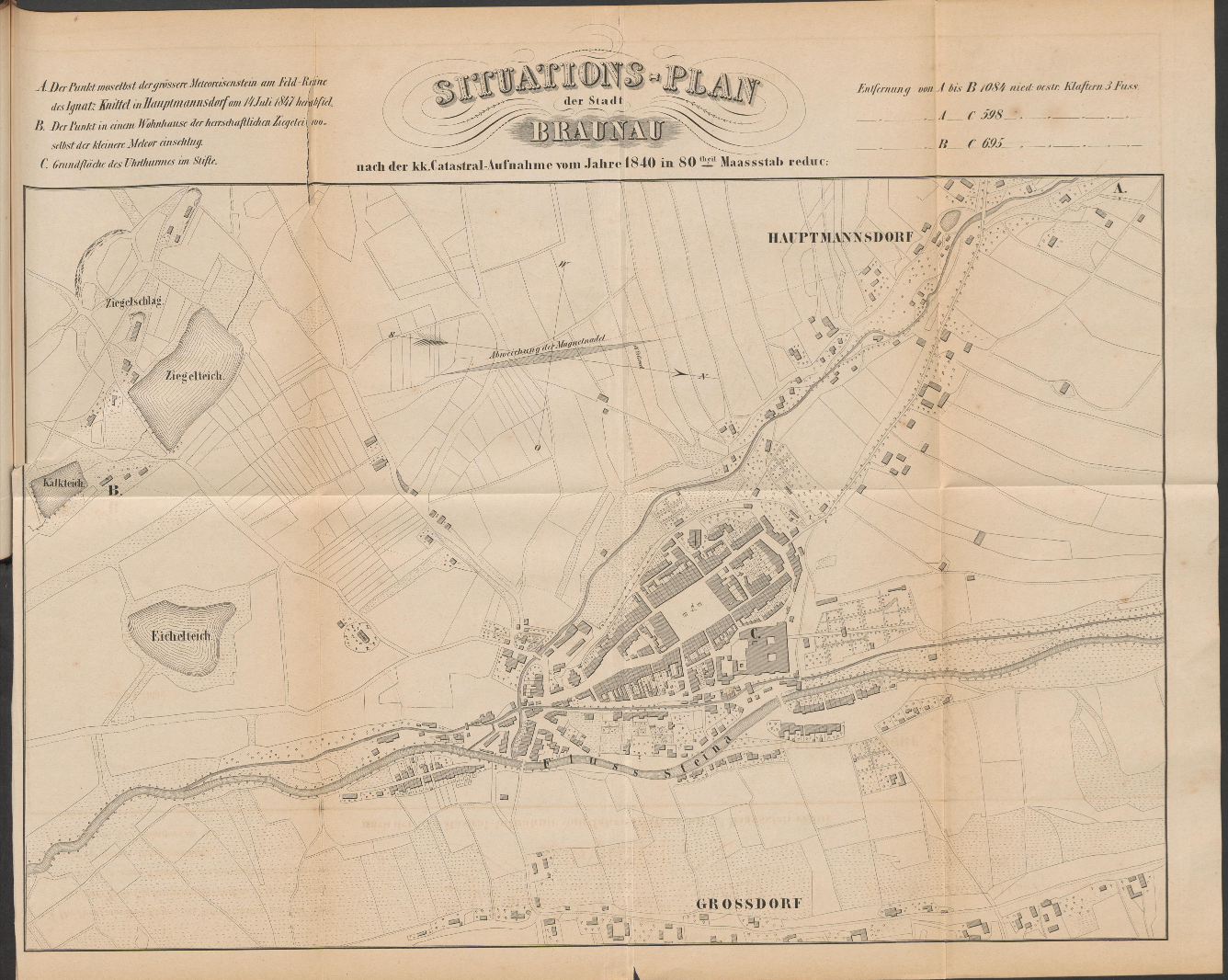
Since I had heard the same reports, we went together to the place where the object seemed to have fallen. At a distance of about thirty fathoms we found in the bank of a field ridge a crack about three feet deep, from which the turf had been torn out and scattered about five fathoms toward the north. Out of this opening protruded the point of a blackish stone.
When the earth that covered it had been removed and I attempted to pull the stone out, I noticed that it was still very warm, so that I hesitated for a moment to touch it. After a short time I drew it out. It was covered with a kind of vapor, as when one breathes upon a windowpane; this soon disappeared and I saw before me a black mass of iron on which numerous depressions, resembling impressions made by stones, were visible.
With considerable effort I afterwards chiseled off a small piece with a crowbar, and took it to a blacksmith in Braunau to have it melted; it could indeed be forged under the hammer, but it would not melt.
The Second Mass (The House Strike)
Soon after the event at Hauptmannsdorf, another report spread that lightning had also struck the Dominical house at Ziegelschlag, located 1084 klafters and three feet from the Hauptmannsdorf fall site. The house was inhabited by a poor family man named Pohl, but the strike had caused no fire.
The forester Pollack went to inspect the site: In the shingled roof of the house he found a hole about the size of a human head. In addition, a roof lath, a rafter, and the clay ceiling layer with a beam lying in it had all been pierced diagonally.
At the bottom of the southeastern wall of the sleeping room of three children there was a violent destruction of the structure, which at first blocked the frightened children from leaving the room.
In the southeastern partition wall of the sleeping chamber of three children, a violent destruction of the structure had occurred which at first prevented the frightened children from leaving the room.
Under these ruins the meteorite was searched for with great effort, but it was not discovered until the following day, the 15th of July.
This mass weighed 30 pounds and 10 loth (Austrian weight) and differed from the Hauptmannsdorf piece only in its external form.
Description of the Two Meteorite Masses
Both meteorite pieces were metallic masses composed primarily of iron and were similar in their internal structure, though they differed somewhat in external form.
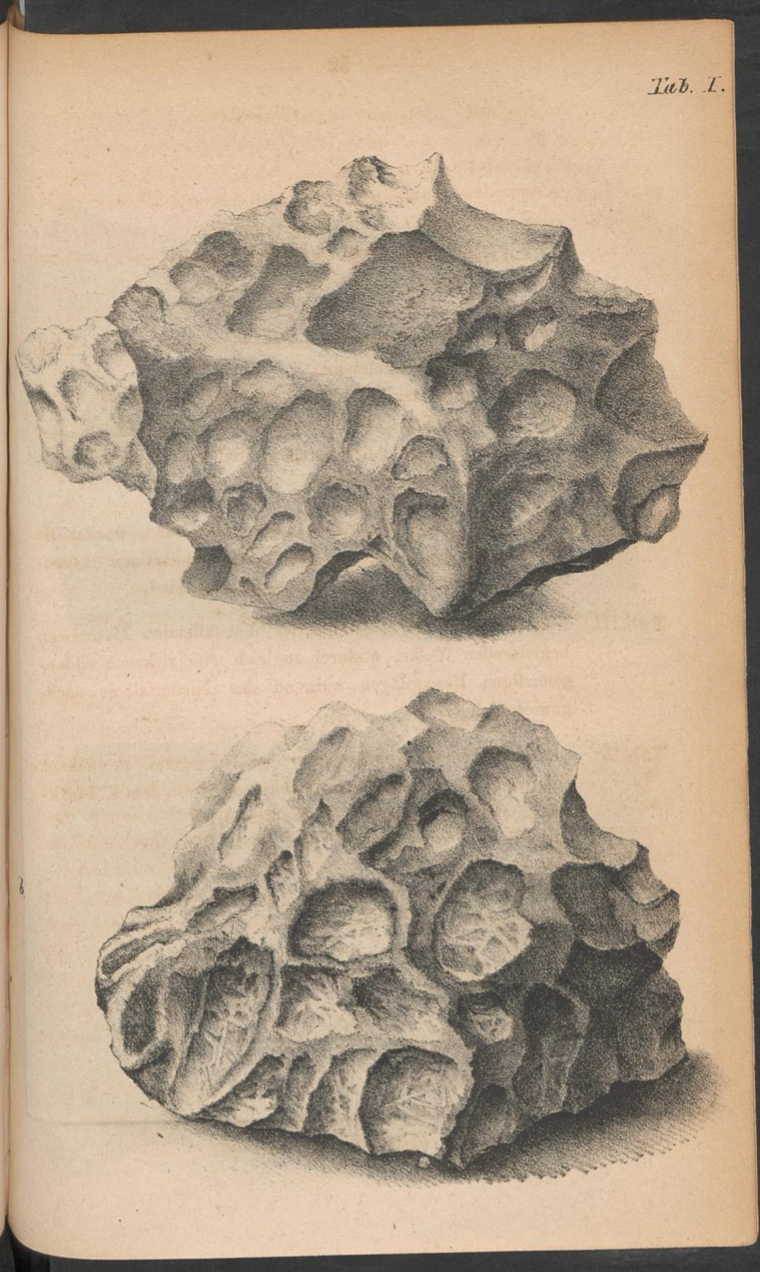
The mass that fell near Hauptmannsdorf and was taken from the hole in the field ridge weighs about 42 pounds (Austrian weight) [23.6 kg] and has a somewhat irregular but generally rounded form. Its surface is covered everywhere with the black crust characteristic of meteorites, which in many places shows a brownish coloration caused by oxidation. Over the entire convex surface there occur numerous shallow depressions and cavities of different sizes, which together give the mass a somewhat cellular appearance. These depressions are generally less deep and less sharply defined than those seen on the fragment that fell into the Dominical house at Ziegelschlag. The edges of the cavities are rounded and appear as though they had been softened or partially melted, which gives the whole surface the appearance of having once been in a state of fusion.
On several parts of the surface the crust shows fine flow-like streaks, indicating the direction in which the molten coating moved while the mass passed with great velocity through the atmosphere.
The form of the mass suggests that it once constituted a portion of a larger spherical body, from which one or more fragments were separated during the fiery passage through the air. When the broken surfaces of this piece are compared with those of the fragment found in the Dominical house, it becomes evident that both pieces belonged to the same original mass and that they fit together as fragments of a single larger body.
The fragment that fell into the Dominical house weighs about 30½ pounds [17.1 kg] and resembles a segment of a sphere whose convex side is covered with concavities of varying size that are connected with one another in a cellular pattern. These depressions are about ¼ to ½ inch deep and ½ to 1½ inches wide, and many of them contain chopped straw from the clay ceiling plaster into which the meteorite penetrated. The straw is so firmly united with the black coating characteristic of meteorites that it cannot be removed without damaging this crust. Remarkably, the straw shows no signs of charring, only a somewhat darker yellow coloration. Seen from a distance this gives the meteorite a gold-like sheen.
The Hauptmannsdorf mass was cut and distributed soon afterward. The smaller mass was preserved in the local abbey and eventually made its way to the Natural History Museum in Prague, where it can still be seen today:
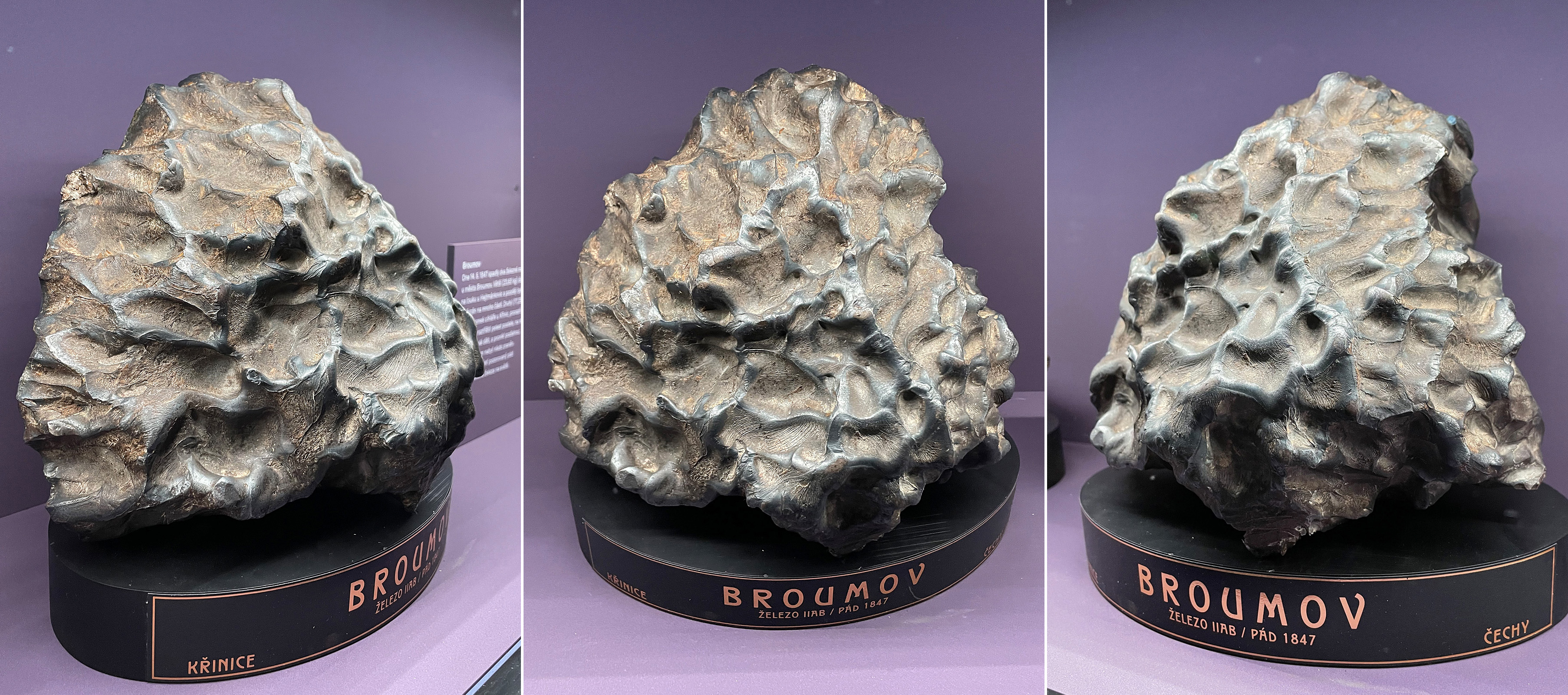
At the time, Braunau was only the third documented iron meteorite fall, and it has been extensively studied by academics over the past ~two centuries. Buchwald’s full entry for the meteorite can be read here, and it includes a brief summary of the extensive discoveries that can be uniquely or partially attributed to this meteorite. Perhaps most notably, Johann Georg Neumann first observed what would later be named “Neumann lines” in this meteorite in 1848.
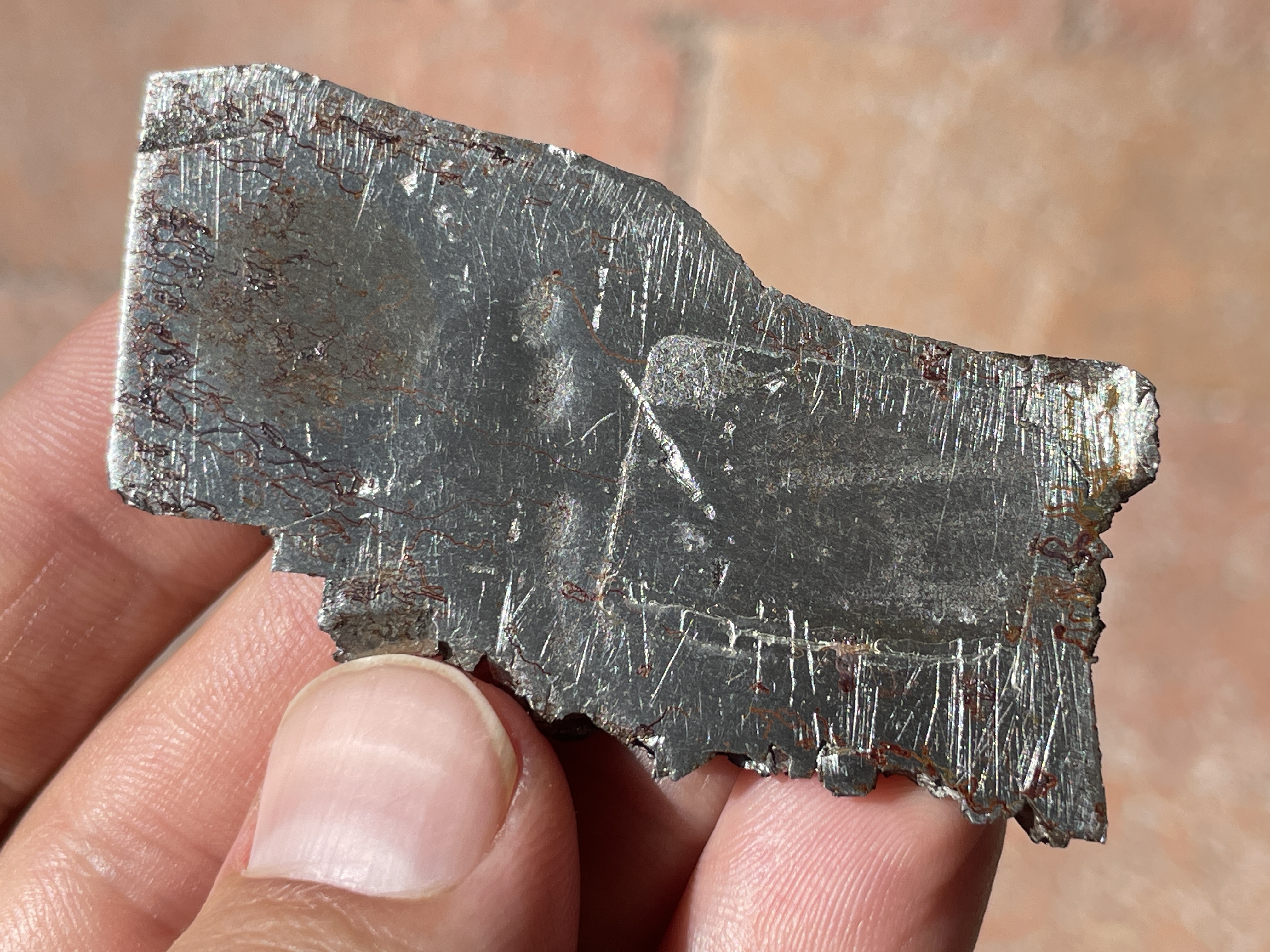
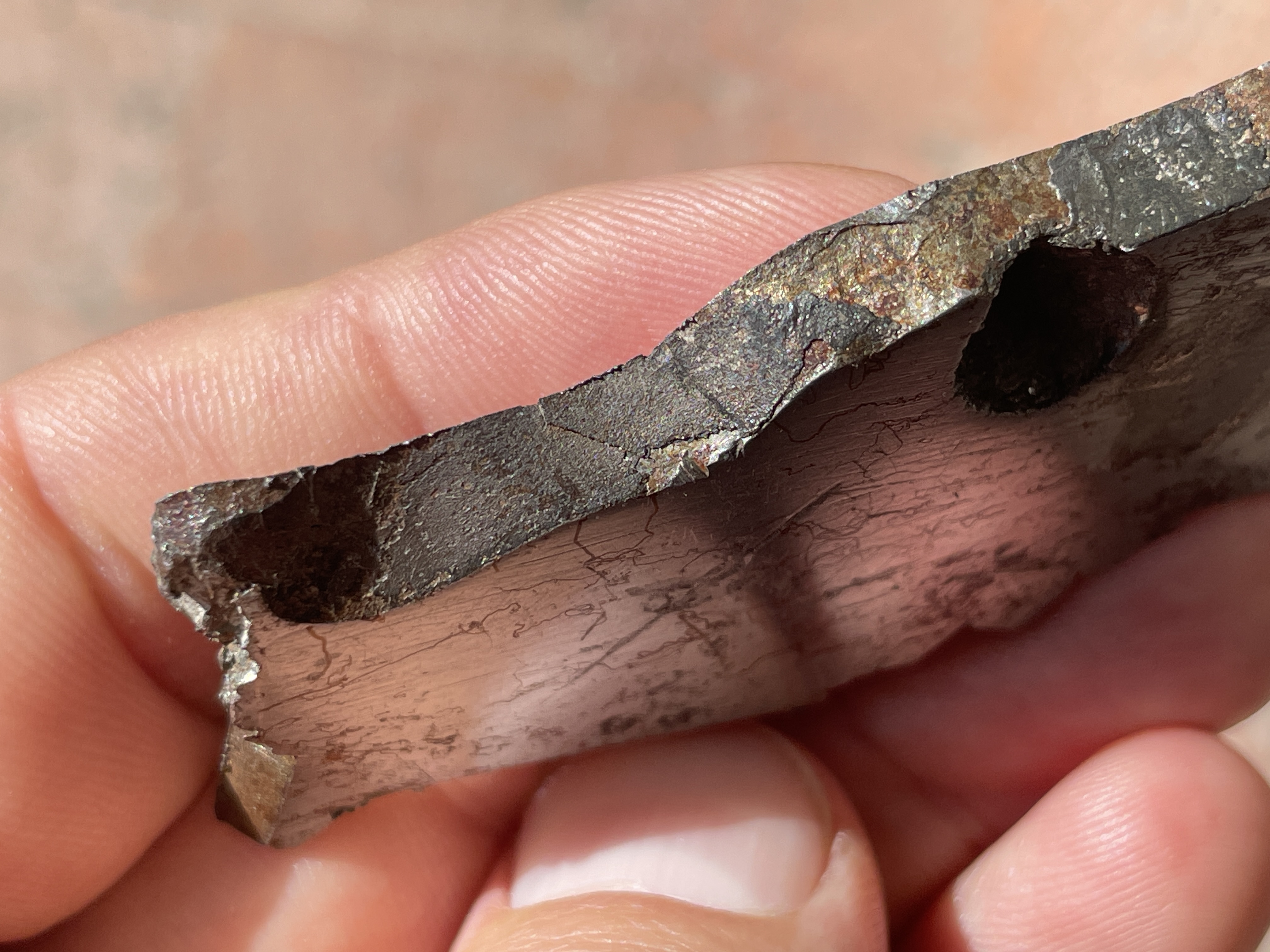
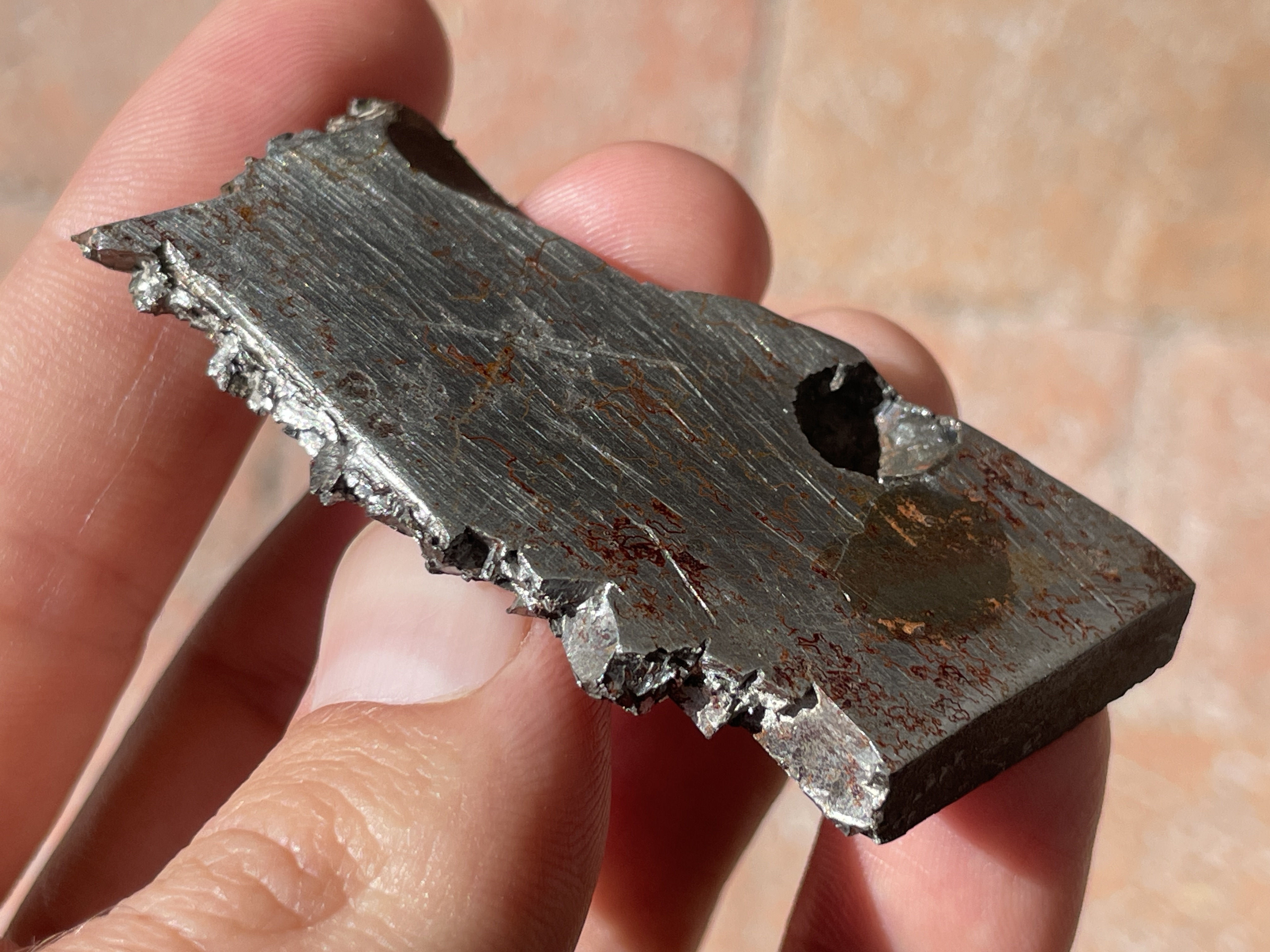
This 45.535 gram fusion-crusted part slice turned up in a European mineral collection in 2026. It is a piece of the Hauptmannsdorf mass recovered by Joseph Tepper a few hours after the fall.