Gibeon was first documented by European explorers/colonists circa 1836, however, as with many iron meteorites, the odd chunks of extraterrestrial metal appear to have been known to local peoples for thousands of years.
Most of the documented history of the meteorite in sources like Buchwald focuses on when particular masses were recovered, from where, and by whom. I think these are the important points:
- The Gibeon strewnfield is huge, atypical, and poorly understood. Fragments have been found scattered over an area measuring at least 230 x 115 miles, with ~no apparent mass sorting. Svend Buhl put together a map of the field with masses’ documented find locations. Based on it, I think it’s safe to say that we have no idea which direction the asteroid was moving when it entered the atmosphere or how exactly it broke up. It also wouldn’t surprise me at all if larger specimens or an impact crater (or craters) are eventually found.
- To date, at least 25-50 tonnes of fragments have been recovered from the strewnfield, making Gibeon one of the largest known meteorite finds on Earth. The largest single recovered fragment is relatively small, at around 2.18 tonnes.
- Hunting for fragments of Gibeon effectively stopped when Namibia passed strict export laws on meteorites, circa 2004. Unless something changes, we will not learn much more about the strewn field in the future.
~45 kilograms, individual with hole. ‘The Man in the Moon.’ Ex. Erich Haiderer
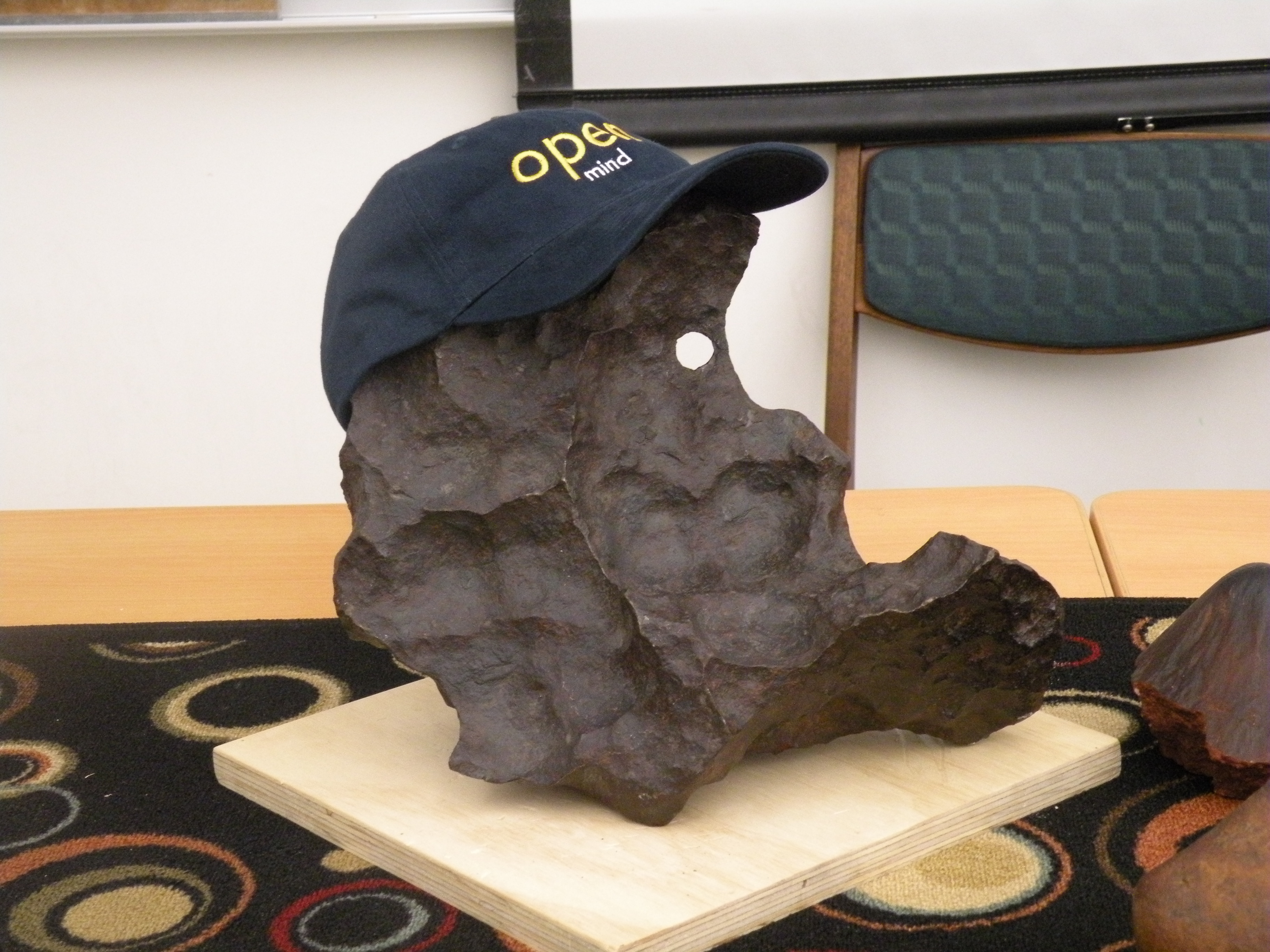
~51 kilogram oriented Gibeon with spotty fusion crust and flow-lines. Photos taken after an outreach event at a local LA public school. Ex. Moritz and Achim Karl
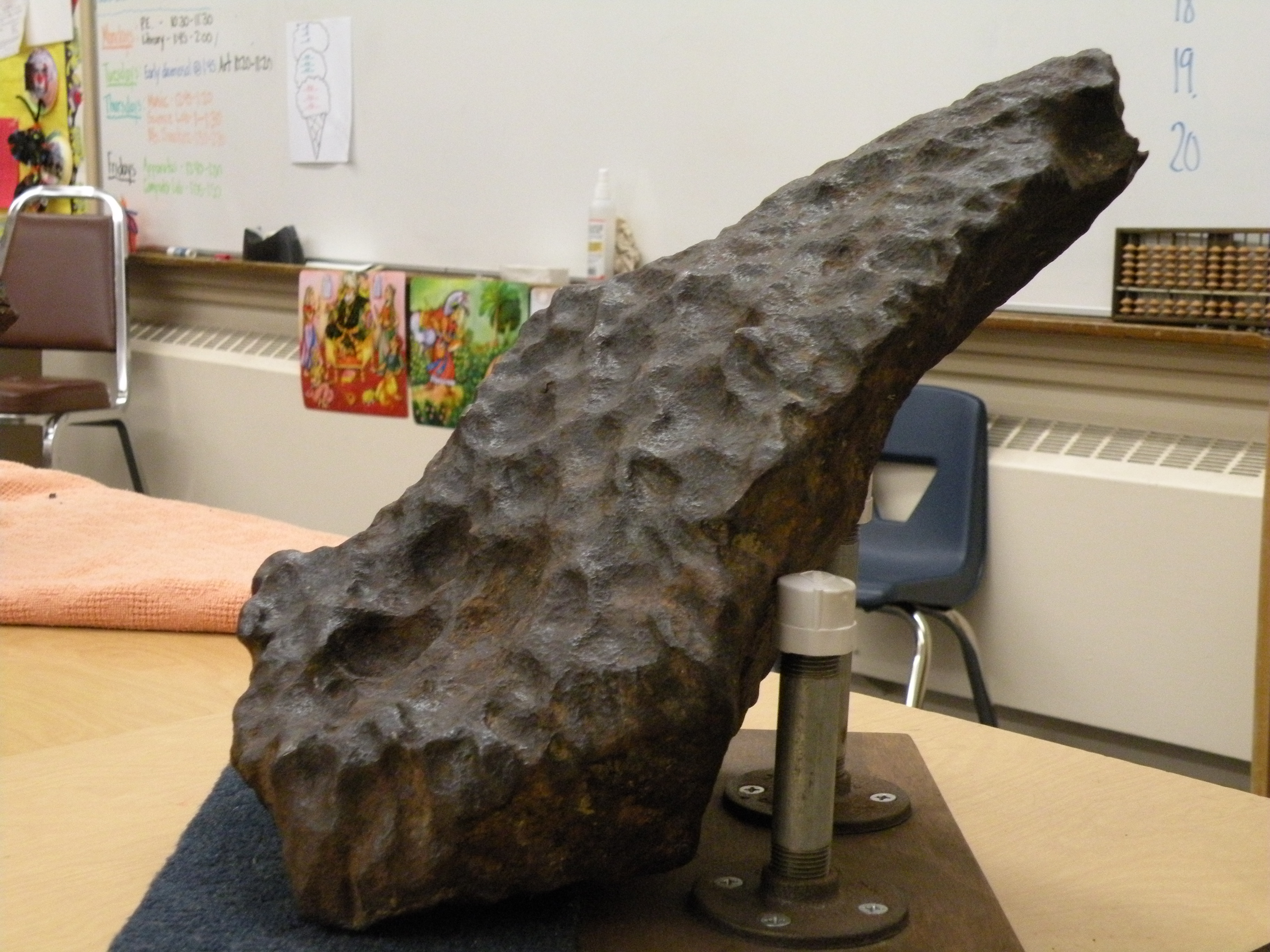
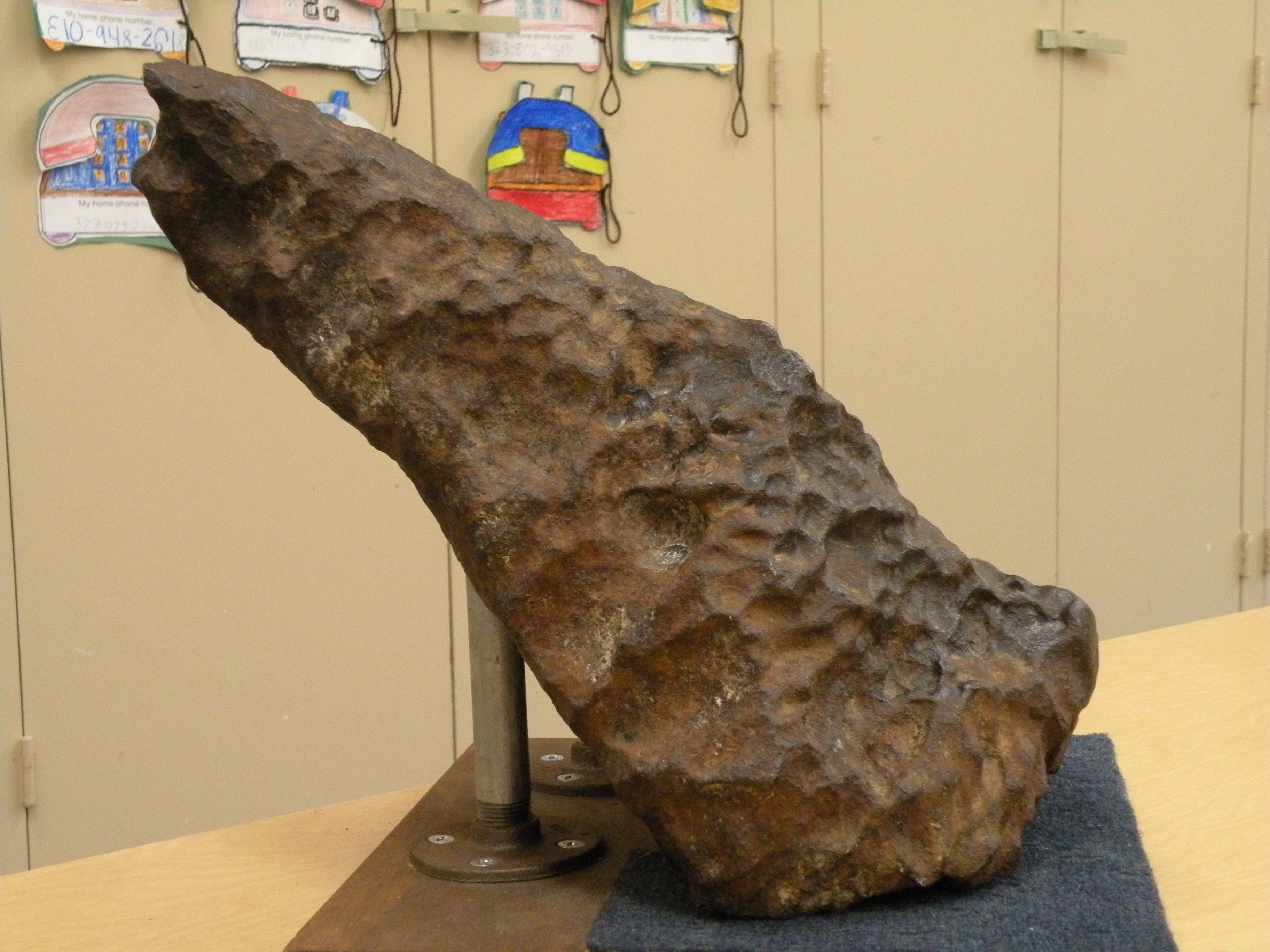
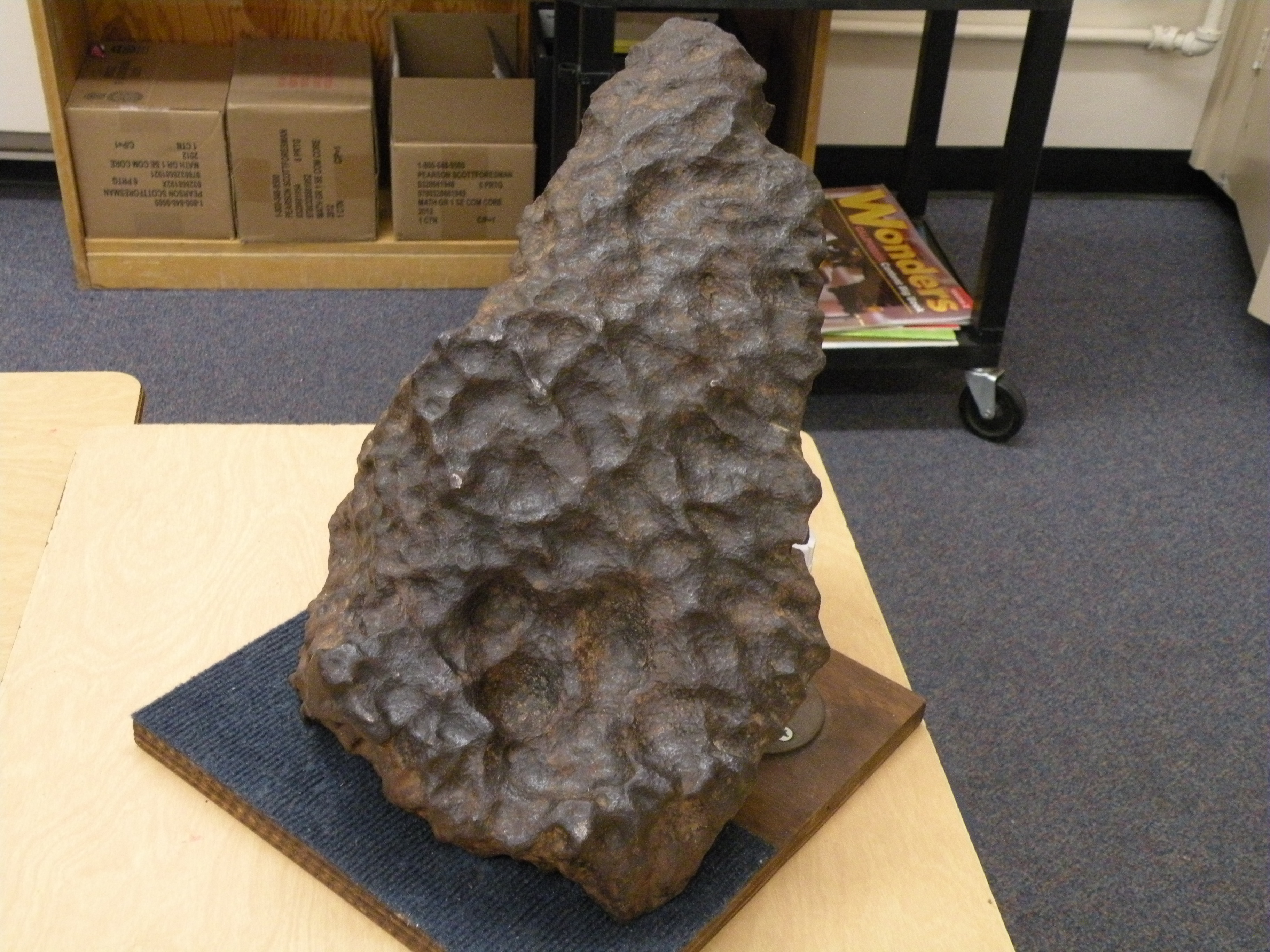
364 kilogram individual, on loan to UCLA. The gallery’s hours and other information can be found here.
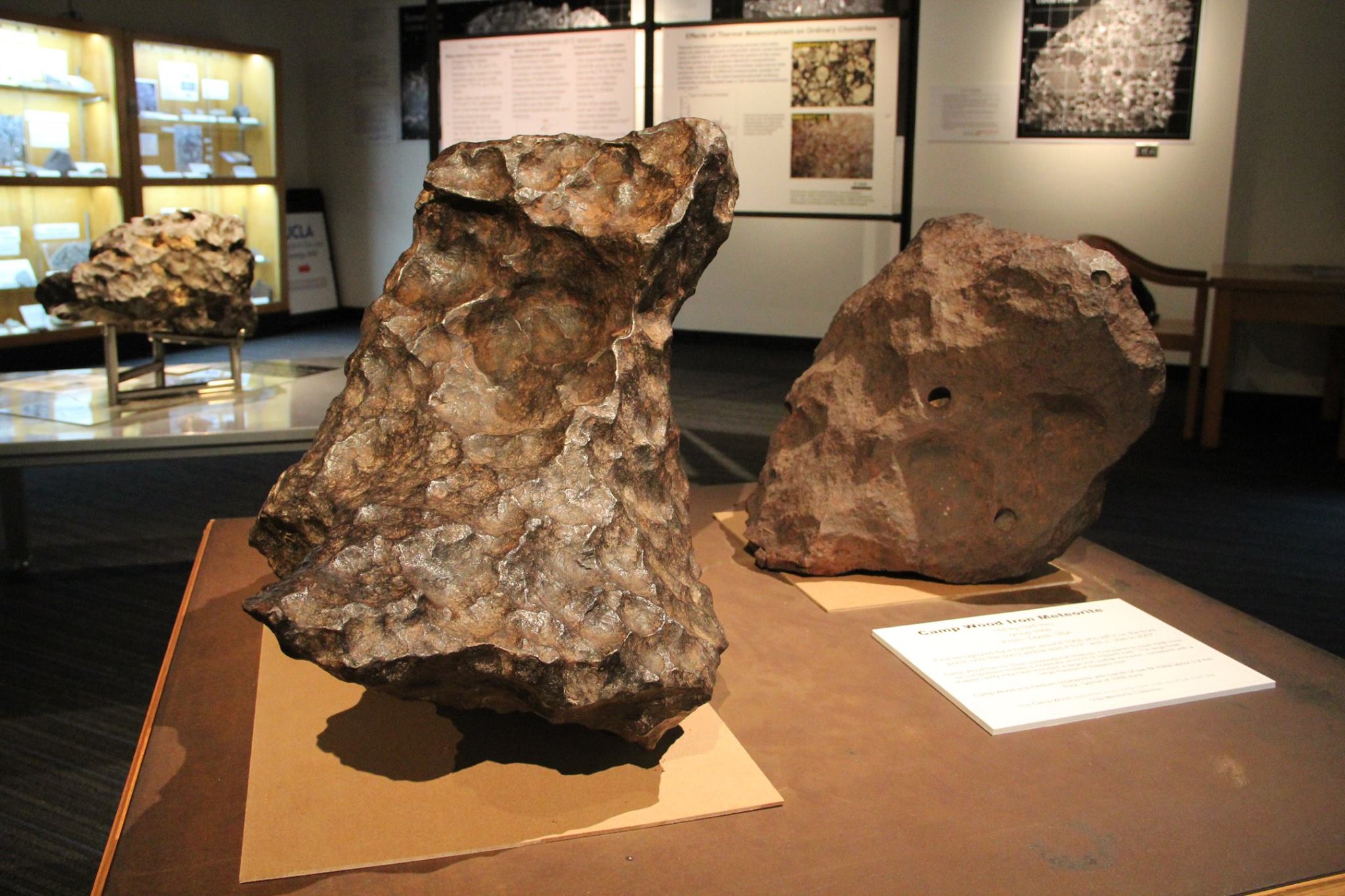
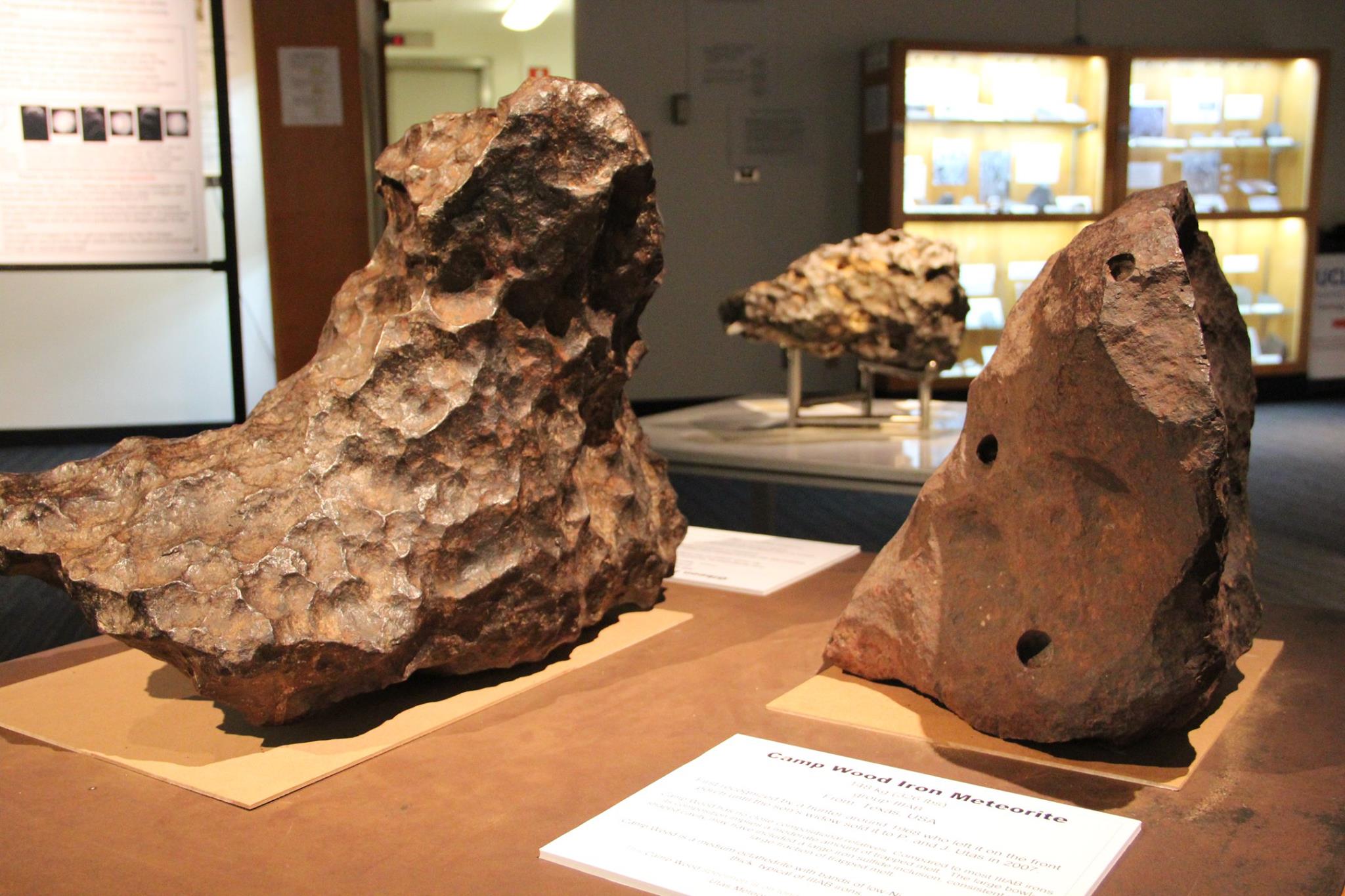
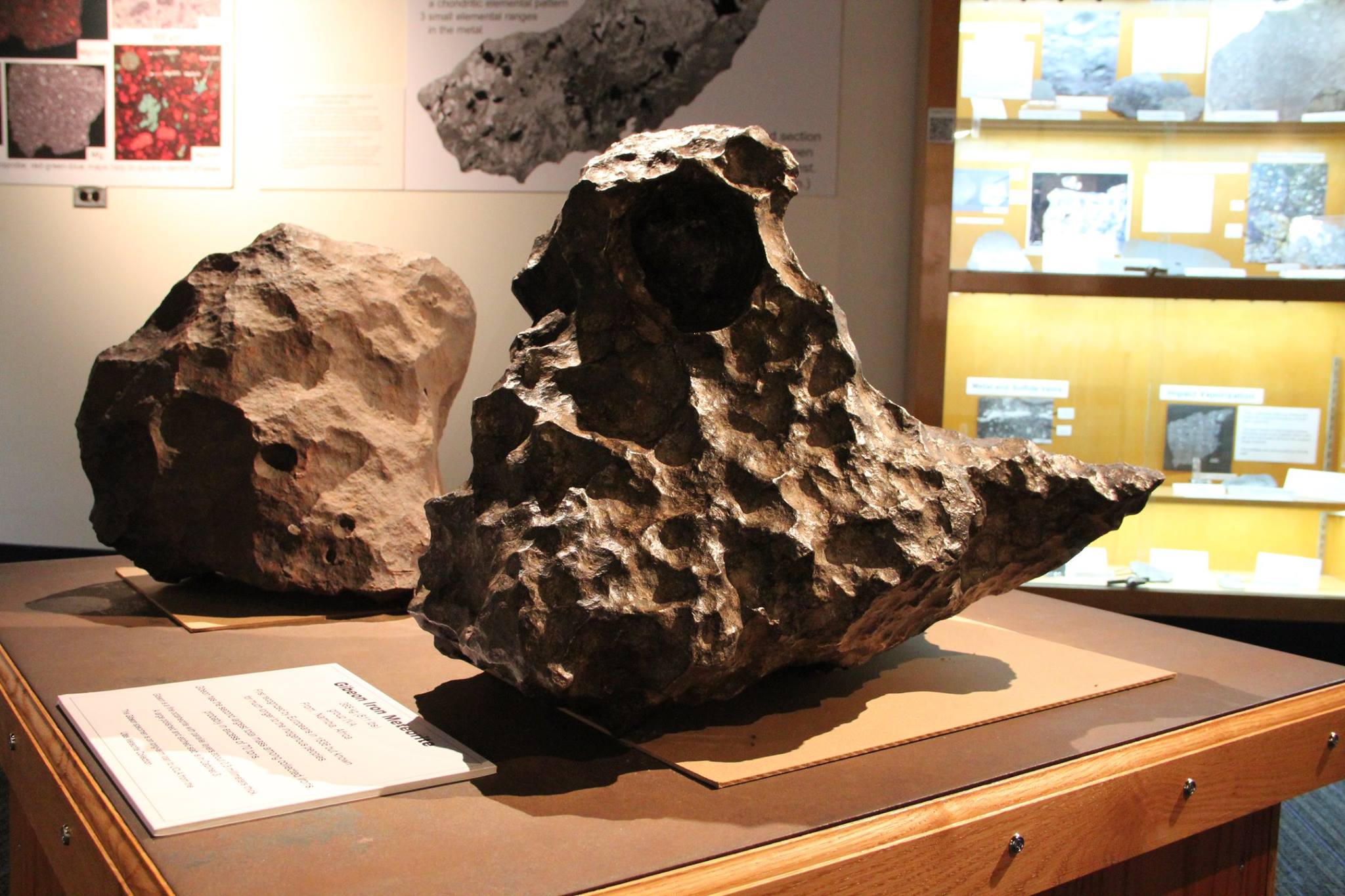
46 kilograms, from the liquidation of Robert Hesselgesser’s estate (background).
Photos are from the auction.
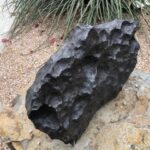
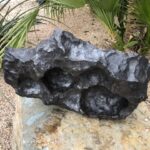
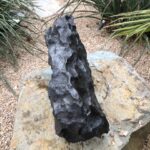
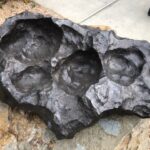
And here’s a photo of the unpacking of a 111 kilogram Gibeon from Walter Zeitschel. It came in an old wooden toychest that literally fell to pieces on our doorstep, circa 2000. We moved the mess inside and lifted the iron with the ropes as pictured.
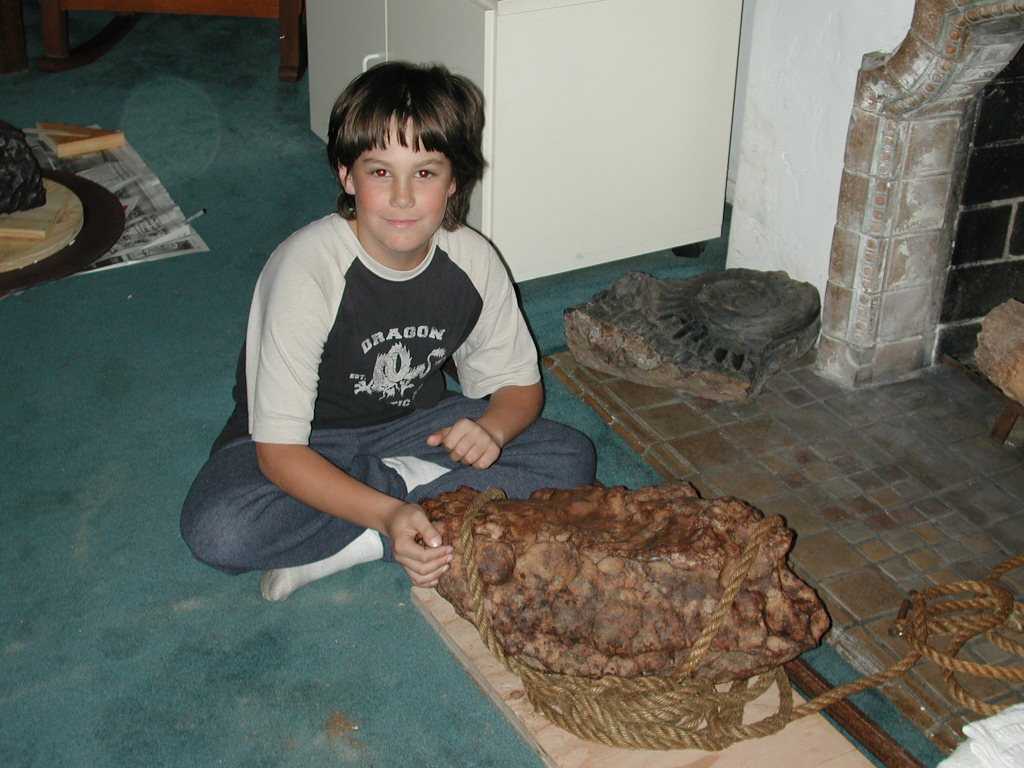
The fossil in the background is a pretty cool one: Helicoprion.